English Parliament Quotes
Whereas in his Majesty's province of Massachusetts Bay, in New England, an attempt hath lately been made to throw off the authority of the parliament of Great Britain over the said province, and an actual and avowed resistance, by open force, to the execution of certain acts of parliament, hath been suffered to take place, uncontrolled and unpunished, ...: and whereas, in the present disordered state of the said province, it is of the utmost importance ... to the reestablishment of lawful authority throughout the same, that neither the magistrates acting in support of the laws, nor any of his Majesty's subjects aiding and assisting them therein, or in the suppression of riots and tumults, ... should be discouraged from the proper discharge of their duty, by an apprehension, that in case of their being questioned for any acts done therein, they may be liable to be brought to trial for the same before persons who do not acknowledge the validity of the laws …
Several years before the Battle of Bunker Hill, revolutionary activity had already broken out in the American colonies—See {634132} for an example. This law gave the British authorities much more “clout” in dealing with the “seditious” American activities. It protected English law enforcement officials from being tried in local Colonial courts for murder or assault in putting down insurrections. George Washington and other Patriots were outraged over this law. See {634131}.
English Parliament, Administration of Justice Act, May 20, 1774
Sourced by: Eigen's Political and Historical Quotations

Several years before the Battle of Bunker Hill, revolutionary activity had already broken out in the American colonies—See {634132} for an example. Parliament passed the Administration of Justice Act of 1774 which gave the British authorities much more “clout” in dealing with the “seditious” American activities. It protected English law enforcement officials from being tried in local Colonial courts for murder or assault or unnecessary force in putting down insurrections in the colonies. Washington and other patriots used this term to describe the Act. Their reason was that under the new law, a British Soldier could kill a colonist and would not be subject to arrest and trial in local colonial courts. So there was no check on the law enforcement authorities use of unnecessary or arbitrary force. English troops could commit murder and never be accountable to the people—hence the name. Ironically, in America today, most of the Federal and state laws on the subject tend to give law enforcement officials the same kind of immunity and impunity which the Founding Fathers found so objectionable. Civilian review boards of police use of force are no allowed in many American communities.

This quotation shows that the dissent leading to the American Revolution did not emerge suddenly in 1776 after the Battle of Bunker Hill. Dissent, sedition and even violence was documented here in 1774. Salem at the time was the second largest port in the colony and the customs tax collectors—Loyalist Americans—were run out of Salem.


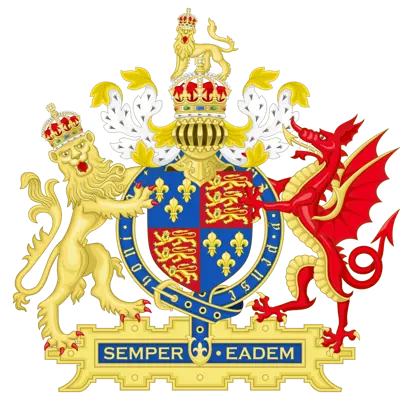
The Parliament of England was the legislature of the Kingdom of England, existing from the early 14th century until 1707, when it united with the Parliament of Scotland to become the Parliament of Great Britain after the political union of England and Scotland created the Kingdom of Great Britain.
