George Washington Quotes
Murder Act
Several years before the Battle of Bunker Hill, revolutionary activity had already broken out in the American colonies—See {634132} for an example. Parliament passed the Administration of Justice Act of 1774 which gave the British authorities much more “clout” in dealing with the “seditious” American activities. It protected English law enforcement officials from being tried in local Colonial courts for murder or assault or unnecessary force in putting down insurrections in the colonies. Washington and other patriots used this term to describe the Act. Their reason was that under the new law, a British Soldier could kill a colonist and would not be subject to arrest and trial in local colonial courts. So there was no check on the law enforcement authorities use of unnecessary or arbitrary force. English troops could commit murder and never be accountable to the people—hence the name. Ironically, in America today, most of the Federal and state laws on the subject tend to give law enforcement officials the same kind of immunity and impunity which the Founding Fathers found so objectionable. Civilian review boards of police use of force are no allowed in many American communities.
George Washington, 1732-1799, 1st President of the United States (VA), Derogatory name for the British Administration of Justice Act
Sourced by: Eigen's Political and Historical Quotations

Several years before the Battle of Bunker Hill, revolutionary activity had already broken out in the American colonies—See {634132} for an example. This law gave the British authorities much more “clout” in dealing with the “seditious” American activities. It protected English law enforcement officials from being tried in local Colonial courts for murder or assault in putting down insurrections. George Washington and other Patriots were outraged over this law. See {634131}.

This quotation shows that the dissent leading to the American Revolution did not emerge suddenly in 1776 after the Battle of Bunker Hill. Dissent, sedition and even violence was documented here in 1774. Salem at the time was the second largest port in the colony and the customs tax collectors—Loyalist Americans—were run out of Salem.


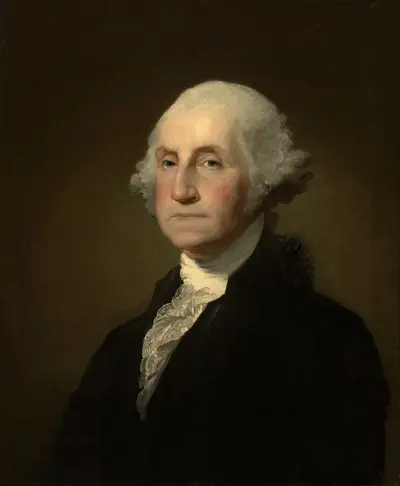
George Washington was the first President of the United States (1789-97), the Commander-in-Chief of the Continental Army during the American Revolutionary War, and one of the Founding Fathers of the United States. He presided over the convention that drafted the current United States Constitution and during his lifetime was called the "father of his country".
