William Legge Quotes
What passed at Charles Town ... although not equal in criminality to the proceedings in other colonies [the Boston Tea Party] can yet be considered in no other light than that of a most unwarrantable insult to the authority of this kingdom
In South Carolina, the Patriots, in reaction to the Tea Tax, did not destroy the tea, but stopped it from being landed and sold. Finally Lt. Governor Bull had the tea moved into the Customs house in Charleston. The patriots were satisfied that it was under lock and key and could not be sold or distributed and the tea tax was thus not collected. The British Secretary of State for America, however did not regard the compromise favorably.
William Legge, 1731-1801, 2nd Earl of Dartmouth, English Secretary of State for the Colonies, Letter to South Carolina Lt. Governor William Bull, 1775
Sourced by: Eigen's Political and Historical Quotations

He was acting as French Foreign Secretary at the time.

Several years before the Battle of Bunker Hill, revolutionary activity had already broken out in the American colonies—See {634132} for an example. This law gave the British authorities much more “clout” in dealing with the “seditious” American activities. It protected English law enforcement officials from being tried in local Colonial courts for murder or assault in putting down insurrections. George Washington and other Patriots were outraged over this law. See {634131}.

While the official battles of the American Revolution did not begin until 1776, parts of the American colonies were in a de facto state of rebellion and the British could not enforce their laws. See {636925} for another of the King’s statements.


The British had closed Boston Harbor until the English merchants who lost their goods at the Boston Tea Party were paid for their damages. A convention was called to discuss a response to the closing of Boston Harbor and New York City convened a public meeting to come up with instructions for their delegates to the conference. One amazing thing was that they advocated a boycott of English goods. What was amazing was that there was no nation and New York and Massachusetts were separate entities and sectionalism was rife, yet New Yorkers were willing to sacrifice to help Bostonians. The New York sacrifice was all the greater because most of the imports from England landed at New York harbor where there was work created for New Yorkers and business for New York companies. New York stood to lose the most with a boycott. Philadelphia which also advocated a boycott, lost little as they were not a harbor for imports. New Yorkers also provided assistance to their competitors, the Bostonians who were out of work. See {589413}.

The treaty ending the Revolutionary war guaranteed that the English bankers and merchants who had debts going back to before the American Revo
lution would have “no impediment” in collecting their debts in America. However, Rhode Island and Virginia in particular placed many impediments and made it virtually impossible for debts to be collected in their states. The John Jay led Supreme Court, in particular, overturned state actions on the grounds that they had implemented Patrick Henry’s sentiment and hence violated the treaty.
This quotation is very important because it illustrates in the first of our great national political debates, the same views held by extreme, right wing anti-government, and Tea Party adherents regarding government in general and taxation in particular. See {634235} and {634234} for more of his arguments at the Ratification Convention.

Wilkes was a strong advocate for the American cause—so much so that some in Parliament tried to deny him his seat in Parliament for his disloyal point of view.


Christie was a Tory—a British supporter, but what he did that was so offensive was that he had requested that British Troops come to Maryland to control the rebellion.

Lee at that time was one of the leaders of the American colonists’ cause. He was born in England and was an old friend of Burgoyne who had just arrived in America. Lee wanted to explain the American viewpoint. Lee later became the senior major general under Washington.


A. B. Magil. Poem written upon the suicide of the Russian Poet, Vladimir Vladimirovich Mayakovsky, 1893-1930. The fact that a Marxist Russian Poet would commit suicide was not seen as the result of a mental problem like depression, but as a political act and a statement of dissatisfaction with 1930 Russia.


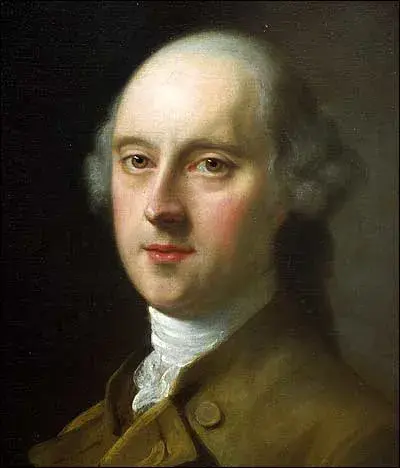
William Legge, 2nd Earl of Dartmouth, PC, FRS, styled as Viscount Lewisham from 1732 to 1750, was a British statesman who is most remembered for his part in the government before and during the American Revolution, and as the namesake of Dartmouth College.
