Orestes Augustus Brownson Quotes
Civil war was taught them [Americans] that "the sacred right of insurrection" is as much out of place in a democratic state as in an aristocratic or a monarchical state; and that the government should always be clothed with ample authority to arrest and punish whoever plots its destruction.
Orestes Augustus Brownson, 1803-1876, Clergyman & Writer, The American Republic, 1865
Sourced by: Eigen's Political and Historical Quotations


England had gone through a bloody Civil War with the Parliament on one side and the King on the other. The King lost and was beheaded later that year. See {597353}.


With martial law came the authority to seize ALL guns in the colony for the emergency. This was not to disarm the general populace. It reflected the fact that there were relatively few colonists who owned guns as they were very expensive. The Governor could take those that existed and use them to defend against the rebels or whatever. There were more gun owners in the Revolution but still a minority. Even after the War of 1812 only 30% of Americans were armed, and that shortly decreased to 10% as there was no real culture of gun ownership in early America. This would come around the Civil War.

In 1786, many veterans of the American Revolution had still not yet been paid the promised wages for their military service by the new national government. The States however had imposed taxes on farms to fund the new state governments and pay the state’s war debts mostly to rich merchants. Many veterans could not pay the taxes and some were thrown into debtors’ prison, and others had their farms foreclosed. Led by Daniel Shays, a small group of Massachusetts men conducted a mini rebellion by closing local court houses and tried to take over the local state armory. The Governor put down the rebellion by force and the rebels were jailed. Adams, the the former governor, recommended the death penalty and several of the rebels were executed. Thomas Jefferson disagreed. See {604839} for his famous quotation on the subject. This was one of the early crises of the new country and it was handled very poorly and unfairly.

For the required Oath, see {623308} . There were several to the amnesty. These included graduates of West Point and the Naval Academy who had joined the rebellion, senior officers and officials of the Confederacy, those who were accused of war crimes and abusing Union prisoners of war, persons who went abroad to help the Confederacy, and Northerners who had gone South to aid the rebellion. Many scholars think that although Lincoln had expressed his desire to provide an amnesty after the war was over, he probably would have been more lenient than Johnson who exempted many on the Southern side—especially the leaders. Ironically, Johnson was a Southerner but was personally, morally outraged at taking up arms against the United States and in that sense was much more of a hawk than Lincoln and many of the radical Republicans even. However, he was an inveterate racist and resisted most of the attempts to implement equality during the Reconstruction. Many argue that but for Johnson, Reconstruction might have been much more successful. It was easy for Southerners to resist equal rights for Blacks when they knew that the President was also opposed to measures to produce equality.


Tamoyo ceased publication in 1823. It’s name comes from the name of an indigenous Indian tribe. A region of Brazil has been given the same name.

This was one of the several early unofficial Emancipations that was issued in the Civil War.
Adams' interesting distinction was later taken much further by many communist countries in their treatment of "enemies" of "peoples' governments."

The Roman Catholic Defender Organization had about 300 thousand volunteers, and Belfast was the central location of the Defender leaders.


Italy was in the midst of civil war with the rebels in Emila wanting its independence from the civil authority of the Pope who then controlled virtually all of Italy. The French emperor, Napoleon BonaparteII, advised that the only way to produce peace was to allow Emila to have its independence. He was the last Pope to hold temporal power. While it should not be surprising, the Pope’s statement is essentially the same position that every autocratic authority has taken when there has been some local success of the rebels.
In 1786, many veterans of the American Revolution had still not yet been paid the promised wages for their military service by the new national government. The States however had imposed taxes on farms to fund the new state governments and pay the state’s war debts mostly to rich merchants. Many veterans could not pay the taxes and some were thrown into debtors’ prison, and others had their farms foreclosed. Led by Daniel Shays, a small group of Massachusetts men conducted a mini rebellion by closing local court houses and tried to take over the local state armory. The Governor put down the rebellion by force and the rebels were jailed. Samuel Adams, the former governor, recommended the death penalty (see {630527}), and several of the rebels were executed. Thomas Jefferson disagreed, via this famous quotation. This was one of the early crises of the new country and it was handled very poorly and unfairly.


Warning to John Calhoun and other South Carolinians about the implications of their nullification of the Tariff Act of 1832:


Smith and his Mormon followers had been attacked and persecuted by mobs in various communities for availing themselves of their constitutional rights to follow their own religion. In those days the governor did not have command of a national guard and had to ask the President for troops to put down a mob or insurrection. Some Governors were in sympathy with the mobs and would do nothing to protect the Mormons. Smith had written to most of the then likely Presidential candidates of both major parties asking for their position on the Mormons who were facing persecution wherever they went. None of the politicians would make any satisfactory commitments. Smith took Direct Action and became the only major religious official to have run for the Presidency of the United States until Pat Robertson tried and failed in 2000. Smith’s assassination shortly thereafter cut his run for the Presidency short before it made much headway and politically he had no chance to affect the race.

This was his name for the wealthy slaveowners in Tennessee. He was the military governor of Tennessee when he so labeled the secessionists.
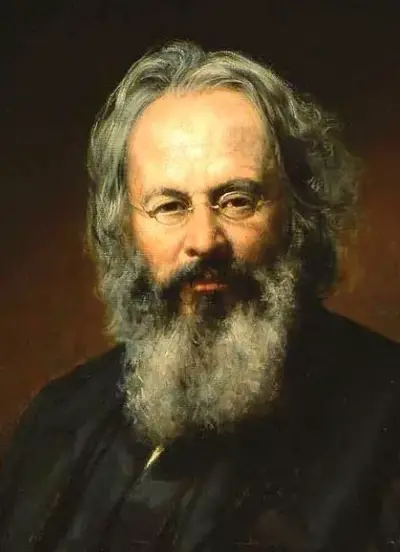
Orestes Augustus Brownson was a New England intellectual and activist, preacher, labor organizer, and noted Catholic convert and writer. Brownson was a publicist, a career which spanned his affiliation with the New England Transcendentalists through his subsequent conversion to Roman Catholicism.
