George Washington Quotes
I. George Washington, President of the United States, do hereby command all persons, being insurgents, as aforesaid, and all others whom it may concern, on or before the 1st day of September next to disperse and retire peaceably to their respective abodes. And I do moreover warn all persons whomsoever against aiding, abetting, or comforting the perpetrators of the aforesaid treasonable acts; and do require all officers and other citizens, according to their respective duties and the laws of the land, to exert their utmost endeavors to prevent and suppress such dangerous proceedings
George Washington, 1732-1799, 1st President of the United States (VA), Proclamation on the Whiskey Rebellion, August 11, 1794
Sourced by: Eigen's Political and Historical Quotations


Philip was the first to sign. It is not clear who actually wrote this revolutionary document which led to the Dutch revolt against Spain.

This was one of the several early unofficial Emancipations that was issued in the Civil War.


The king summoned all his judges before him and stated that since they were his surrogates, he could remove cases at will from their jurisdiction and decide them himself. Sir Edward Coke, a leading jurist of the day, dissented and urged that since his Majesty was not learned in the law, he should leave legal matters to his judges and lawyers.

With martial law came the authority to seize ALL guns in the colony for the emergency. This was not to disarm the general populace. It reflected the fact that there were relatively few colonists who owned guns as they were very expensive. The Governor could take those that existed and use them to defend against the rebels or whatever. There were more gun owners in the Revolution but still a minority. Even after the War of 1812 only 30% of Americans were armed, and that shortly decreased to 10% as there was no real culture of gun ownership in early America. This would come around the Civil War.


This quotation shows that the dissent leading to the American Revolution did not emerge suddenly in 1776 after the Battle of Bunker Hill. Dissent, sedition and even violence was documented here in 1774. Salem at the time was the second largest port in the colony and the customs tax collectors—Loyalist Americans—were run out of Salem.

Italy was in the midst of civil war with the rebels in Emila wanting its independence from the civil authority of the Pope who then controlled virtually all of Italy. The French emperor, Napoleon BonaparteII, advised that the only way to produce peace was to allow Emila to have its independence. He was the last Pope to hold temporal power. While it should not be surprising, the Pope’s statement is essentially the same position that every autocratic authority has taken when there has been some local success of the rebels.

Porfirio Diaz - the longtime dictator of Mexico stole the election of 1910 and had his opponent Francisco Madero arrested and imprisoned. Madero got out, crossed the border to San Antonio, and issued this declaration which started the Mexican Revolution.

Smith and his Mormon followers had been attacked and persecuted by mobs in various communities for availing themselves of their constitutional rights to follow their own religion. In those days the governor did not have command of a national guard and had to ask the President for troops to put down a mob or insurrection. Some Governors were in sympathy with the mobs and would do nothing to protect the Mormons. Smith had written to most of the then likely Presidential candidates of both major parties asking for their position on the Mormons who were facing persecution wherever they went. None of the politicians would make any satisfactory commitments. Smith took Direct Action and became the only major religious official to have run for the Presidency of the United States until Pat Robertson tried and failed in 2000. Smith’s assassination shortly thereafter cut his run for the Presidency short before it made much headway and politically he had no chance to affect the race.

He was trying to justify the arrest, torture and mistreatment of 15 trade union activists in Zimbabwe, and in the process showed himself for the brutal dictator that he had become.


For the required Oath, see {623308} . There were several to the amnesty. These included graduates of West Point and the Naval Academy who had joined the rebellion, senior officers and officials of the Confederacy, those who were accused of war crimes and abusing Union prisoners of war, persons who went abroad to help the Confederacy, and Northerners who had gone South to aid the rebellion. Many scholars think that although Lincoln had expressed his desire to provide an amnesty after the war was over, he probably would have been more lenient than Johnson who exempted many on the Southern side—especially the leaders. Ironically, Johnson was a Southerner but was personally, morally outraged at taking up arms against the United States and in that sense was much more of a hawk than Lincoln and many of the radical Republicans even. However, he was an inveterate racist and resisted most of the attempts to implement equality during the Reconstruction. Many argue that but for Johnson, Reconstruction might have been much more successful. It was easy for Southerners to resist equal rights for Blacks when they knew that the President was also opposed to measures to produce equality.

During his Ambassadorial confirmation hearings Helms lied about the role the CIA under his direction had played in the destabilization of Chile and the Allende administration. In 1977 he was convicted of perjury. He was not convicted for carrying out any presidential orders but for lying under oath to Congress. No President had ordered him to do that. The CIA had covertly aided in a coup usurping the popular, elected President Salvador Allende—today a national hero in Chile. We picked the wrong side in the political battle in Chile. We helped a military dictator overthrow a democratically elected president. See {622168}.


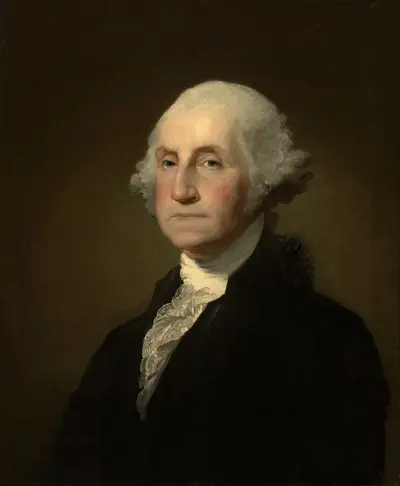
George Washington was the first President of the United States (1789-97), the Commander-in-Chief of the Continental Army during the American Revolutionary War, and one of the Founding Fathers of the United States. He presided over the convention that drafted the current United States Constitution and during his lifetime was called the "father of his country".
