Richard Helms Quotes
Who would have thought that it would someday be a crime to carry out the orders of the President of the United States?
During his Ambassadorial confirmation hearings Helms lied about the role the CIA under his direction had played in the destabilization of Chile and the Allende administration. In 1977 he was convicted of perjury. He was not convicted for carrying out any presidential orders but for lying under oath to Congress. No President had ordered him to do that. The CIA had covertly aided in a coup usurping the popular, elected President Salvador Allende—today a national hero in Chile. We picked the wrong side in the political battle in Chile. We helped a military dictator overthrow a democratically elected president. See {622168}.
Richard Helms, 1913-2002, Director, U. S. Central Intelligence Agency, U. S. Ambassador to Iran, Quoted in Miller, Spying for America, 1989
Sourced by: Eigen's Political and Historical Quotations

A student had asked the director if the rumor that the CIA had influenced the 1970 Chilean election through covert activities was true. Note that for Helms, the ends justified the means. . See {622167}.

Opinion in case against the government for illegal CIA activities. The defense had been that the President had authorized and ordered the operations in question.


Senator Church was the chairman of the committee. It’s reports (14 in all) are the most extensive documentation of U. S. intelligence ever compiled.

President George W. Bush had ignored a federal law and tapped the phones of Americans without probable cause and a warrant issued by a court. The President’s defenders argued that the President, as Commander in Chief, has the Constitutional responsibility to lead the military and protect the nation. Intelligence gathering is part of military activity. Therefore the intelligence gathering is a Constitutional duty and the Congress, under the separation of powers doctrine, may not interfere with the President’s Constitutional Duty to conduct intelligence. Under this doctrine, the President need not obey laws that he believes impinge on his management of the war effort and the defense of the nation. Most legal scholars believe that this argument is nonsense, but the George W. Bush administration has stated the doctrine and it was the subject of much litigation.


Agree resigned from the CIA in protest to its political position.


Hoover was asked if he would take oral questions.


President George W. Bush, during the War on Terror, asserted the authority to contravene laws passed by Congress and signed by a previous president. He further, argued that he did not have to inform Congress when he ordered steps that broke the existing laws. His position was based on his claim that there were inherent Presidential powers in wartime granted by the Constitution and the Congress could not override the Constitution.
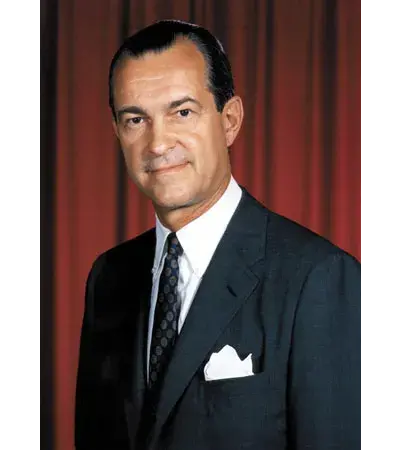
- Born: March 30, 1913
- Died: October 23, 2002
- Nationality: American
- Profession: Diplomat, CIA Director
Richard McGarrah Helms was an American government official and diplomat who served as Director of Central Intelligence (DCI) from 1966 to 1973. Helms began intelligence work with the Office of Strategic Services during World War II. Following the 1947 creation of the Central Intelligence Agency (CIA) he rose in its ranks during the presidencies of Truman, Eisenhower and Kennedy. Helms then was DCI under Presidents Johnson and Nixon.
