James Bovard Quotes
There has been so much power concentrated. There is no leash on that power anymore and Americans face the situation that this power is getting momentum with each passing year with each presidency.
Bovard, James. Interview by Brian Lamb. Q&A, C-SPAN, 22 Jan. 2006.


There have been many examples of Presidents in time of war who have asked Congress & received additional powers whose constitutionality was sometimes tested. The Alien & Sedition acts of the John Adams administration, Lincoln in the Civil War controlling the Southern governments, Wilson jailing people verbally opposing the draft, FDR incarcerating Japanese Americans in WWII. However, in those cases, the President asked for and got the powers from Congress. Nichols claimed that by Bush, just assuming powers, he was acting like a king & not a president, and that per se was an impeachable offence. As unpopular as Bush was, his Vice President was much moreso, & Bush was in his last term; neither party wanted to go through another impeachment after the Republican attempt to oust William Clinton ended in acquittal. Other constitutional scholars do not believe the “acting like a king” rises to the level of an impeachable offense; only specific “high crimes & misdemeanors” would qualify.

President George W. Bush had ignored a federal law and tapped the phones of Americans without probable cause and a warrant issued by a court. The President’s defenders argued that the President, as Commander in Chief, has the Constitutional responsibility to lead the military and protect the nation. Intelligence gathering is part of military activity. Therefore the intelligence gathering is a Constitutional duty and the Congress, under the separation of powers doctrine, may not interfere with the President’s Constitutional Duty to conduct intelligence. Under this doctrine, the President need not obey laws that he believes impinge on his management of the war effort and the defense of the nation. Most legal scholars believe that this argument is nonsense, but the George W. Bush administration has stated the doctrine and it was the subject of much litigation.

See {588514} for an additional take on the subject.


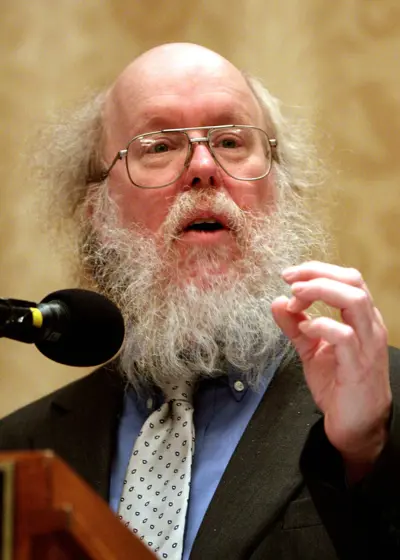
James Bovard (/bəˈvɑːrd/; born 1956) is an American libertarian author and lecturer whose political commentary targets examples of waste, failures, corruption, cronyism and abuses of power in government. He is a USA Today columnist and is a frequent contributor to The Hill. He is the author of Attention Deficit Democracy and nine other books. He has written for the New York Times, Wall Street Journal, Washington Post, New Republic, Reader's Digest, The American Conservative, and many other publications. His books have been translated into Spanish, Arabic, Japanese, and Korean.
