Arthur Miller Quotes
There’s a difference between a citizen and the President of the United States. The citizen can’t kill as many people.
Arthur Miller, Playwright, Commentary: On Politics and the Art of Acting, C-SPAN, November 4, 2001
Sourced by: Eigen's Political and Historical Quotations


President George W. Bush had ignored a federal law and tapped the phones of Americans without probable cause and a warrant issued by a court. The President’s defenders argued that the President, as Commander in Chief, has the Constitutional responsibility to lead the military and protect the nation. Intelligence gathering is part of military activity. Therefore the intelligence gathering is a Constitutional duty and the Congress, under the separation of powers doctrine, may not interfere with the President’s Constitutional Duty to conduct intelligence. Under this doctrine, the President need not obey laws that he believes impinge on his management of the war effort and the defense of the nation. Most legal scholars believe that this argument is nonsense, but the George W. Bush administration has stated the doctrine and it was the subject of much litigation.

See {588514} for an additional take on the subject.


Opinion in case against the government for illegal CIA activities. The defense had been that the President had authorized and ordered the operations in question.

There have been many power struggles between the Legislative and Executive branches, but one of the more humorous began on August 27, 1906. President Theodore Roosevelt directed the Public Printer to observe a new orthographic convention designed to simplify the spelling of English. A furor broke out as Congress fought against such a radical departure The President was defeated and so was "simplified spelling."


When John Erlichmann claimed that President Nixon could break and enter and burglarize in the name of national security, the chairman of the investigation replied:
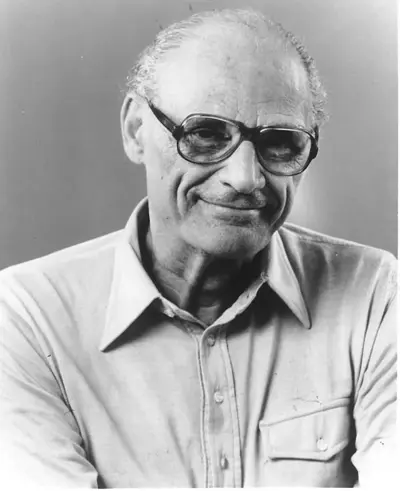
Arthur Asher Miller was an American playwright and essayist in the 20th-century American theater. Among his most popular plays are All My Sons (1947), Death of a Salesman (1949), The Crucible (1953), and A View from the Bridge (1955, revised 1956). He wrote several screenplays and was most noted for his work on The Misfits (1961). The drama Death of a Salesman has been numbered on the short list of finest American plays in the 20th century.
