William Barr Quotes
Presidential powers are not exercised by a body or group. The Constitution vests 'all executive power' in one and only one person - the president.
Barr, William P. "Memorandum to Deputy Attorney General Rod Rosenstein." United States Department of Justice, 8 June 2018.


There have been many power struggles between the Legislative and Executive branches, but one of the more humorous began on August 27, 1906. President Theodore Roosevelt directed the Public Printer to observe a new orthographic convention designed to simplify the spelling of English. A furor broke out as Congress fought against such a radical departure The President was defeated and so was "simplified spelling."


Alberto Gonzalez, White House Counsel and later Attorney General who was forced to resign and David S. Addington, Counsel to the Vice President, had come up with a novel view of the powers of the presidency. They argued that since the President is the Commander in Chief, in a war situation or intelligence gathering thereto, has the Constitutional responsibility for that function, he need not obey any laws of Congress as in the conduct of the war Congress would be impinging on the Constitutional separation of powers which itself was prohibited by the Constitution. The argument did not find any significant legal support but for a while the George W. Bush White House behaved as if this were the law, despite the fact that even in the American Revolution and the War of 1812 Congress passed laws regulating the conduct of the armed forces as is provided for in other parts of the Constitution. Yet even Goldsmith would allow the President some powers that many think are unconstitutional and/or belong to Congress. See {32436}.

See {635809} for an additional view on this act.


FBI Director James Comey had testified that in his single one-on-one meeting with President Donald Trump, the President told him to cease the FBI investigation of his National Security Director. Trump however claimed that he was not giving Comy an order or instruction but was just making an informal suggestion. Trump then fired Comey who did not terminate the investigation and the National Security Director was found to have committed several felonies and turned states evidence and then pled guilty to one. Some accused President trump of trying to obstruct justice but the President claimed that he had just made a suggestion to Director Comey and he fired him for other reasons.


President George W. Bush had ignored a federal law and tapped the phones of Americans without probable cause and a warrant issued by a court. The President’s defenders argued that the President, as Commander in Chief, has the Constitutional responsibility to lead the military and protect the nation. Intelligence gathering is part of military activity. Therefore the intelligence gathering is a Constitutional duty and the Congress, under the separation of powers doctrine, may not interfere with the President’s Constitutional Duty to conduct intelligence. Under this doctrine, the President need not obey laws that he believes impinge on his management of the war effort and the defense of the nation. Most legal scholars believe that this argument is nonsense, but the George W. Bush administration has stated the doctrine and it was the subject of much litigation.

Bybee, then and Assistant Attorney General, took the legal position that the President could order the torture of enemy combatants regardless of Congressional laws prohibiting torture. Two years later the memo’s recipient, Alberto Gonzalez, in his confirmation hearings as Attorney General, repudiated the memo, then stating that the President was not above the law and had to obey the laws of Congress that apply to the military.
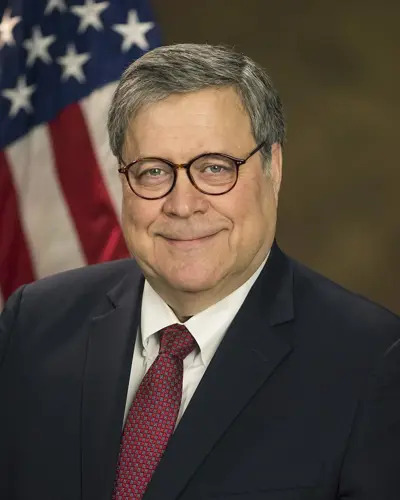
William Pelham Barr is an American attorney who served as the 77th and 85th United States Attorney General in the administrations of Presidents George H. W. Bush and Donald Trump.
