Jack Goldsmith Quotes
I don’t know if President (George W.) Bush understood how extreme some of the arguments were about executive power that some people in his administration were making.
Alberto Gonzalez, White House Counsel and later Attorney General who was forced to resign and David S. Addington, Counsel to the Vice President, had come up with a novel view of the powers of the presidency. They argued that since the President is the Commander in Chief, in a war situation or intelligence gathering thereto, has the Constitutional responsibility for that function, he need not obey any laws of Congress as in the conduct of the war Congress would be impinging on the Constitutional separation of powers which itself was prohibited by the Constitution. The argument did not find any significant legal support but for a while the George W. Bush White House behaved as if this were the law, despite the fact that even in the American Revolution and the War of 1812 Congress passed laws regulating the conduct of the armed forces as is provided for in other parts of the Constitution. Yet even Goldsmith would allow the President some powers that many think are unconstitutional and/or belong to Congress. See {32436}.
Jack Goldsmith, Director, Justice Department Office of Legal Counsel, Describing the George W. Bush Administration for whom he worked, Interview with Jeffery Rosen, New York Times Magazine, September 9, 2007
Sourced by: Eigen's Political and Historical Quotations


His role was the equivalent of the Mayor of Washington DC. Even though the Congress had generally been the most powerful branch of the government, public opinion on this was beginning to shift at the turn of the 20th century.


The President had authorized the NSA to spy Americans who might have been suspected of being themselves or being in contact with terrorists without obtaining permission of a court including the Foreign Intelligence Surveillance Act (FISA) special court that had been established for these cases. Instead the administration argues that it was inherent in the powers of the Presidency in time of war.


Much obviously is but every President and his White House deals with issues and problems where there is no time or opportunity to take the effect on electoral politics into consideration. Many actions are taken without any such consideration, sometimes to the regret of the President’s political staff. Even then, the press tends to believe that it was a blunder, that the White House misjudged public opinion or the like when in reality, the President and staff never even considered it.


When the Senate was debating the Gulf of Tonkin Resolution, which would empower the President to take "all necessary measures" to repel any armed attack on U. S. forces, Senator Morse was one of only two Senators opposing the resolution:

This letter was written shortly after the Constitution had been signed by the convention delegates. This difference between Adams and Jefferson would be at the heart of the first great partisan struggle in American history. Adams, as the second President, tried to increase and use the power of the Presidency. Jefferson opposed him, especially when Adams tried to run for a second term. The Adams-led Federalists were pitted against Jefferson’s Democratic Republicans in the first, and perhaps still the most bitter partisan struggle in American political history. The Jeffersonians accused Adams and the Federalists of trying to unravel the American Revolution and revert to a monarchy. The people not only sided with the Democratic Republicans, ousting Adams, but also turned out most of the Federalists. It was the end of the Federalist Party, and a new conservative party—without monarchial tendencies—the Whigs became the new opposition party.


President George W. Bush had ignored a federal law and tapped the phones of Americans without probable cause and a warrant issued by a court. The President’s defenders argued that the President, as Commander in Chief, has the Constitutional responsibility to lead the military and protect the nation. Intelligence gathering is part of military activity. Therefore the intelligence gathering is a Constitutional duty and the Congress, under the separation of powers doctrine, may not interfere with the President’s Constitutional Duty to conduct intelligence. Under this doctrine, the President need not obey laws that he believes impinge on his management of the war effort and the defense of the nation. Most legal scholars believe that this argument is nonsense, but the George W. Bush administration has stated the doctrine and it was the subject of much litigation.

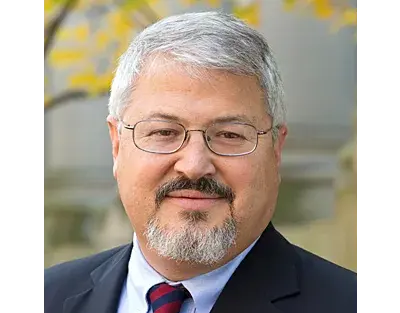
Jack Landman Goldsmith is an American lawyer and Harvard Law School professor who has written extensively in the fields of international law, civil procedure, federal courts, conflict of laws, and national security law. He has been "widely considered one of the brightest stars in the conservative legal firmament."
