Mark Hatfield Quotes
From time to time we must remind ourselves that the President has a role in the legislative process.
Mark Hatfield, Governor of Oregon (Democrat), U. S. Senator (Republican, OR), Senate debate, January 26, 1996)
Sourced by: Eigen's Political and Historical Quotations

Alberto Gonzalez, White House Counsel and later Attorney General who was forced to resign and David S. Addington, Counsel to the Vice President, had come up with a novel view of the powers of the presidency. They argued that since the President is the Commander in Chief, in a war situation or intelligence gathering thereto, has the Constitutional responsibility for that function, he need not obey any laws of Congress as in the conduct of the war Congress would be impinging on the Constitutional separation of powers which itself was prohibited by the Constitution. The argument did not find any significant legal support but for a while the George W. Bush White House behaved as if this were the law, despite the fact that even in the American Revolution and the War of 1812 Congress passed laws regulating the conduct of the armed forces as is provided for in other parts of the Constitution. Yet even Goldsmith would allow the President some powers that many think are unconstitutional and/or belong to Congress. See {32436}.


His main reason for believing this is that all appropriations bills must be initiated by the House of Representatives. Lobbyists therefore often give the House more attention than the Senate.


See Henry Clay for an earlier expression of this point.


President Abraham Lincoln had pocket vetoed his own party's reconstruction bill in the midst of an election year.


Contemplating the effect of a Presidential line-item veto:


A veto power for the President would be absurd because


This was the President’s original role regarding legislation. However, in the 20th century, Presidents have become more active and suggest laws and often initiate the process and then end it by signing the law that he suggested and shepherded through the Congress. But this was never the vision of the Founding Fathers, but since it is not addressed in the Constitution is not an unconstitutional process.

His admonition did little good. That Congress passed fewer bills than any other in history.


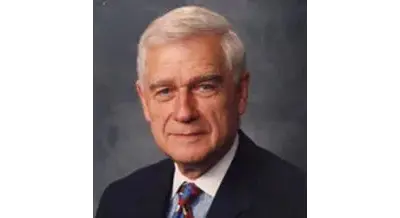
Mark Odom Hatfield was an American politician and educator from the state of Oregon. A Republican, he served for 30 years as a United States Senator from Oregon, and also as chairman of the Senate Appropriations Committee. A native Oregonian, he served in the United States Navy in the Pacific Theater during World War II after graduating from Willamette University. After the war he earned a graduate degree from Stanford University before returning to Oregon and Willamette as a professor.
