William Rawle Quotes
The President … does not originate laws or resolutions; he takes no part in the deliberations on them during their progress; he does not act in relation to them indirectly by advice or interference of any sort, until they have passed both houses: it is only when their operations are concluded that his power begins.
This was the President’s original role regarding legislation. However, in the 20th century, Presidents have become more active and suggest laws and often initiate the process and then end it by signing the law that he suggested and shepherded through the Congress. But this was never the vision of the Founding Fathers, but since it is not addressed in the Constitution is not an unconstitutional process.
William Rawle, 1759–1836, Attorney & Constitutional Scholar, A View of the Constitution of the United States, 1825
Sourced by: Eigen's Political and Historical Quotations


President Abraham Lincoln had pocket vetoed his own party's reconstruction bill in the midst of an election year.


During a weekly news conference held July 28, 2021, Pelosi was asked to explain why the Biden Administration and Democrats in Congress were pushing for student loan debt forgiveness and cancellation.

This concept of Presidential powers greatly expanded the traditional power of the Presidency. To one degree or another this became the view of every president who followed until George W. Bush who went one large step further. He maintained that the President could do that which was specifically prohibited by law if the purpose was to perform a Constitutional duty.


When the Senate was debating the Gulf of Tonkin Resolution, which would empower the President to take "all necessary measures" to repel any armed attack on U. S. forces, Senator Morse was one of only two Senators opposing the resolution:


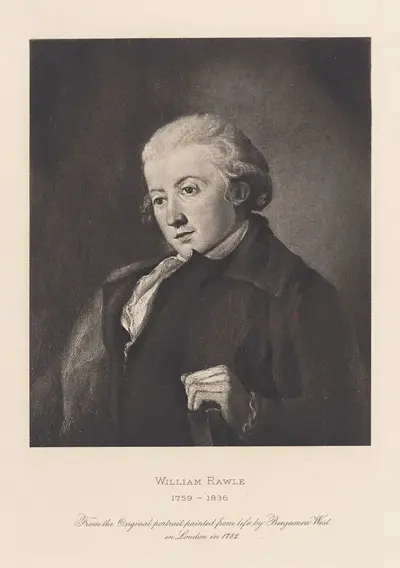
William Rawle was an American lawyer in Philadelphia, who in 1791 was appointed as United States district attorney in Pennsylvania. He was a founder and first president of the Historical Society of Pennsylvania, president of the Pennsylvania Abolition Society, and for 40 years a trustee of the University of Pennsylvania.
