Sam Ervin Quotes
The President ... should be merely the executor of a power of decision that rests elsewhere; that is, in the Congress.
Samuel J. Ervin Jr., 1896-1985, U. S. Congressman & U. S. Senator (Democrat, NC), Congressional Oversight of Executive Agreements, Senate Judiciary Committee, 1972-3
Sourced by: Eigen's Political and Historical Quotations


This was the President’s original role regarding legislation. However, in the 20th century, Presidents have become more active and suggest laws and often initiate the process and then end it by signing the law that he suggested and shepherded through the Congress. But this was never the vision of the Founding Fathers, but since it is not addressed in the Constitution is not an unconstitutional process.

President George W. Bush had ordered NSA agents to bug the phones and email of American citizens who might have been talking with an overseas party or e-mailing them out of the country. The administration thought that American citizens might be part of terrorist sleeper cells or unwittingly were aiding terrorists. The law prohibited such activity—where American citizens were involved—without getting a court order. However, the President claimed that he had the inherent power as commander in chief of exempting the court requirement. Others maintained that even the President is not above the law. What was the big puzzle was that there was a secret court Congress had established just for such cases, but the administration instead decided to bypass the court.


President Abraham Lincoln had pocket vetoed his own party's reconstruction bill in the midst of an election year.


The view that the Supreme Court was the final arbiter of constitutional controversies was not held in early America.

This notion seems to have first been expressed by Edward S. Corwin in 1940


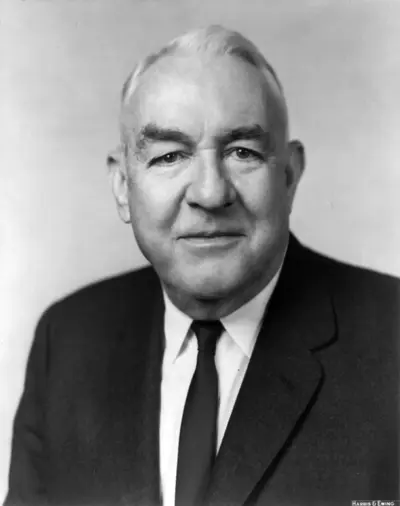
Samuel James Ervin Jr. was an American politician. A Democrat, he served as a U.S. Senator from North Carolina from 1954 to 1974. A native of Morganton, he liked to call himself a "country lawyer", and often told humorous stories in his Southern drawl. During his Senate career, Ervin was a staunch defender of the Jim Crow laws and racial segregation, as the South's constitutional expert during the congressional debates on civil rights. Paradoxically, he was also known for his support of civil liberties. He is remembered for his work in the investigation committees that brought down Senator Joseph McCarthy in 1954 and especially for his investigation of the Watergate scandal in 1972 that led to the resignation of Richard Nixon.
