Benjamin Wade Quotes
The authority of Congress must be respected …. The President must confine himself to his executive duties—to obey and execute, not make the laws.
President Abraham Lincoln had pocket vetoed his own party's reconstruction bill in the midst of an election year.
Benjamin Franklin Wade, 1800-1878, U. S. Senator (Whig & Republican, OH), Henry W. Davis, 1817-1865, U. S. Congressman (American Party & Unconditional Unionist, MD), Wade-Davis Manifesto, August 5, 1864
Sourced by: Eigen's Political and Historical Quotations


When the Senate was debating the Gulf of Tonkin Resolution, which would empower the President to take "all necessary measures" to repel any armed attack on U. S. forces, Senator Morse was one of only two Senators opposing the resolution:


This was the President’s original role regarding legislation. However, in the 20th century, Presidents have become more active and suggest laws and often initiate the process and then end it by signing the law that he suggested and shepherded through the Congress. But this was never the vision of the Founding Fathers, but since it is not addressed in the Constitution is not an unconstitutional process.


This constitution was written 7 years before the national constitutional convention. It shows that there was concern about the separation of powers in United States even before the Constitution was drafted. See {616750} for an even clearer statement of the separation of powers principle.


The view that the Supreme Court was the final arbiter of constitutional controversies was not held in early America.

Vidal, a staunch liberal held this view along with many ultra conservatives end extreme liberals. The constitution requires the Congress to declare war, but they have not done so for any of the wars since WWII. The President assumed the war power. And the only coherent budgets began.

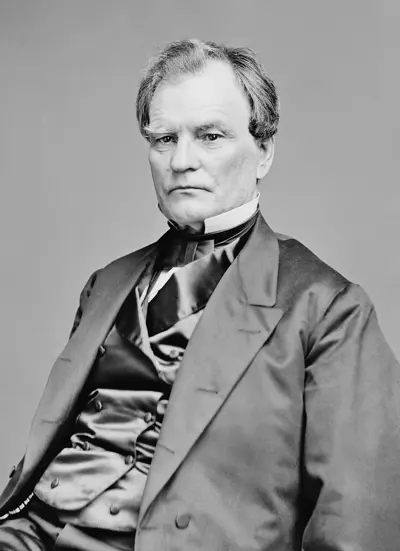
Benjamin Franklin "Bluff" Wade was an American lawyer and politician who served as a United States Senator for Ohio from 1851 to 1869. He is known for his leading role among the Radical Republicans including support for civil rights, women's suffrage, and trade unions. Had the 1868 impeachment of U.S. President Andrew Johnson led to a conviction in the Senate, as president pro tempore of the U.S. Senate, Wade would have become president for the remaining nine months of Johnson's term.
