Sam Ervin Quotes
I do not believe that we [Congress] should allow him [the President] to nullify acts of Congress by executive fiat. There is not one syllable in the Constitution which authorizes the President to exercise such power.
Samuel J. Ervin Jr., 1896-1985, U. S. Congressman & U. S. Senator (Democrat, NC), Congressional Record, May 10, 1973
Sourced by: Eigen's Political and Historical Quotations


The view that the Supreme Court was the final arbiter of constitutional controversies was not held in early America.


The President had authorized the NSA to spy Americans who might have been suspected of being themselves or being in contact with terrorists without obtaining permission of a court including the Foreign Intelligence Surveillance Act (FISA) special court that had been established for these cases. Instead the administration argues that it was inherent in the powers of the Presidency in time of war.

In 1953 the Senator had proposed a Constitutional amendment that would severely curtail the treaty making powers of the President. President Eisenhower actively opposed Bricker and the right wing of his own party. The Senator was outraged. Despite Bricker’s complaining, the public and the Congress sided with the President.


President George W. Bush had ignored a federal law and tapped the phones of Americans without probable cause and a warrant issued by a court. The President’s defenders argued that the President, as Commander in Chief, has the Constitutional responsibility to lead the military and protect the nation. Intelligence gathering is part of military activity. Therefore the intelligence gathering is a Constitutional duty and the Congress, under the separation of powers doctrine, may not interfere with the President’s Constitutional Duty to conduct intelligence. Under this doctrine, the President need not obey laws that he believes impinge on his management of the war effort and the defense of the nation. Most legal scholars believe that this argument is nonsense, but the George W. Bush administration has stated the doctrine and it was the subject of much litigation.

Marshall is famous for, as Chief Justice, establishing the principle that the Judiciary can override Congress and the Executive in determining Constitutionality. However, as this quotation illustrates this principle had been discussed in open debate on the ratification of the Constitution. It was not simply a grab for power by a Chief justice; he uttered this quotation long before he ever suspected he would be a judge but actually spent much of his career in the executive and legislative branch of government.


President George W. Bush had ordered NSA agents to bug the phones and email of American citizens who might have been talking with an overseas party or e-mailing them out of the country. The administration thought that American citizens might be part of terrorist sleeper cells or unwittingly were aiding terrorists. The law prohibited such activity—where American citizens were involved—without getting a court order. However, the President claimed that he had the inherent power as commander in chief of exempting the court requirement. Others maintained that even the President is not above the law. What was the big puzzle was that there was a secret court Congress had established just for such cases, but the administration instead decided to bypass the court.


President Abraham Lincoln had pocket vetoed his own party's reconstruction bill in the midst of an election year.


When the Senate was debating the Gulf of Tonkin Resolution, which would empower the President to take "all necessary measures" to repel any armed attack on U. S. forces, Senator Morse was one of only two Senators opposing the resolution:

This notion seems to have first been expressed by Edward S. Corwin in 1940


Hatch was the chairman of the Senate Judiciary Committee at the time.
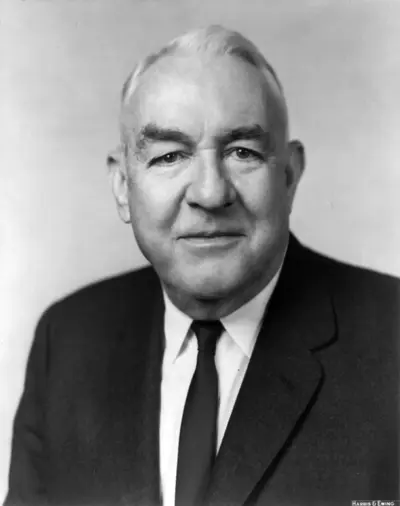
Samuel James Ervin Jr. was an American politician. A Democrat, he served as a U.S. Senator from North Carolina from 1954 to 1974. A native of Morganton, he liked to call himself a "country lawyer", and often told humorous stories in his Southern drawl. During his Senate career, Ervin was a staunch defender of the Jim Crow laws and racial segregation, as the South's constitutional expert during the congressional debates on civil rights. Paradoxically, he was also known for his support of civil liberties. He is remembered for his work in the investigation committees that brought down Senator Joseph McCarthy in 1954 and especially for his investigation of the Watergate scandal in 1972 that led to the resignation of Richard Nixon.
