Leon Jaworski Quotes
The President may be right in how he reads the Constitution. But he also may be wrong. And if he is wrong, who is there to tell him so? And if there is no one, the President, of course, is free to pursue his course of erroneous interpretations. What then becomes of our constitutional form of government?
Leon Jaworski, 1905-1982, Special Watergate Prosecutor, Oral argument before the Supreme Court, July 8, 1974
Sourced by: Eigen's Political and Historical Quotations


The view that the Supreme Court was the final arbiter of constitutional controversies was not held in early America.

Powell was the Secretary of State and Addington kept advising the administration that as long as the President was acting in defense of the country in his capacity as Commander in Chief, he did not have to obey any existing laws that had been Constitutionally passed which in the opinion of the President restricted or limited the President or the executive branch. Addington was an attorney and Assistant to the Vice President, but he was given much responsibility for administration policy. Powell the Secretary of State of the Administration could not have disagreed more and although most politicians including Republicans disagreed with the Addington thesis, Powell was one of the few Republicans to criticize the Addington position.


Marshall is famous for, as Chief Justice, establishing the principle that the Judiciary can override Congress and the Executive in determining Constitutionality. However, as this quotation illustrates this principle had been discussed in open debate on the ratification of the Constitution. It was not simply a grab for power by a Chief justice; he uttered this quotation long before he ever suspected he would be a judge but actually spent much of his career in the executive and legislative branch of government.

One of the conundrums of our constitutional system is who has the last word as to what the Constitution means. Essentially it is the judicial branch headed by the Supreme Court. But there are those who believe that the current popular majority should have a say in what is or is not constitutional. If so the legislative branch should have the last word. Still others say that the President is the only person elected by ALL the people, so his opinion most reflects the will of the public. And then there are most who argue that the Constitutional system was created just to avoid the power of currently popular majorities, and the courts should decide based on the Constitution itself. So the statement has very little meaning except that Phillips thinks that the courts have too much power. Whoever gets to decide what is or is not Constitutional will be accused of being “over” the Constitution by those who don’t like the decisions. In our system, that is the courts.

In 1953 the Senator had proposed a Constitutional amendment that would severely curtail the treaty making powers of the President. President Eisenhower actively opposed Bricker and the right wing of his own party. The Senator was outraged. Despite Bricker’s complaining, the public and the Congress sided with the President.


He had been fired by the George W. Bush White House because he would not rush an indictment against a democratic politician to make the newspapers before the election that year thus being “loyal” to the party and administration.


Senator Grimes thought that Andrew Johnson was a terrible President, but when the House of Representatives impeached President Johnson and he was tried before the Senate, Grimes voted for acquittal. His reason for the his vote was he thought that the Constitution did not provide for the removal if a President just because he has “Unacceptable.” Johnson survived removal from office by a single vote and had Grimes not been so principled about the Constitution, Johnson would have been removed from office. On the other hand, Johnson was a terrible President and many of the nations racial problems in later years emanated from his actions and inactions while in office.

Barstow the Democratic Governor who had no serious opposition in 1853 found himself challenged for reelection by Coles Bashford of the new Republican Party. The Board of Canvassers reported that Governor Barstow had won reelection but by less than 200 votes in the whole state. The Republicans charged that there had been fraud in some of the rural districts and petitioned the Wisconsin Supreme Court which ruled that nonexistent precincts had indeed voted for the Governor. The Barstow forces however refused to recognize the decisions of the court claiming that the court had no jurisdiction over the Board of Canvassers who were part of the executive branch. The Republicans held their own inauguration and two men claimed to be Governor. But the Governor claimed that the state constitution did not give the court any authority to deal with the crisis, He even called out the State Militia to maintain his office and intimidate the Supreme Court and keep the “other governor” from the state house. Nonetheless the court ruled that even the Governor had to obey the law and the Supreme Court would determine what the law was. Barstow finally “resigned.” See {587915} & {587914}.

This concept of Presidential powers greatly expanded the traditional power of the Presidency. To one degree or another this became the view of every president who followed until George W. Bush who went one large step further. He maintained that the President could do that which was specifically prohibited by law if the purpose was to perform a Constitutional duty.


A veto power for the President would be absurd because


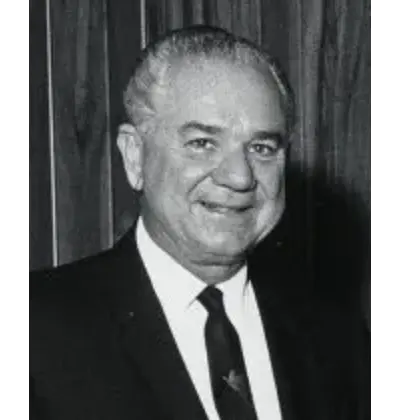
Leonidas "Leon" Jaworski was an American attorney and law professor who served as the second special prosecutor during the Watergate Scandal. He was appointed to that position on November 1, 1973, soon after the Saturday Night Massacre of October 19–20, 1973, which included the dismissal of his predecessor Archibald Cox.
