John Nichols Quotes
Impeachment is not a Constitutional crisis. Impeachment is the cure for a Constitutional crisis.
John Nichols, Journalist & Commentator, PBS, Bill Moyers Journal, July 13, 2007
Sourced by: Eigen's Political and Historical Quotations

In 1953 the Senator had proposed a Constitutional amendment that would severely curtail the treaty making powers of the President. President Eisenhower actively opposed Bricker and the right wing of his own party. The Senator was outraged. Despite Bricker’s complaining, the public and the Congress sided with the President.


Trump refused to divest himself from his hotels and golf courses and received money from States and Foreign countries for their officials who paid the very high rates compared to other hotels and even golf courses trying to gain access and curry favor with the U. S. President. Once Tump became President, he raised the rates for his Hotel on Pennsuylvania Avenue not far from the White House from $250 a night to $500 a night. He also similarly increased the prices of a number of his other properties.


Parliament had developed a formal mechanism of removing officials in extreme circumstances. It was borrowed for the U. S. Constitution. See {584256}.

Marshall is famous for, as Chief Justice, establishing the principle that the Judiciary can override Congress and the Executive in determining Constitutionality. However, as this quotation illustrates this principle had been discussed in open debate on the ratification of the Constitution. It was not simply a grab for power by a Chief justice; he uttered this quotation long before he ever suspected he would be a judge but actually spent much of his career in the executive and legislative branch of government.

One of the conundrums of our constitutional system is who has the last word as to what the Constitution means. Essentially it is the judicial branch headed by the Supreme Court. But there are those who believe that the current popular majority should have a say in what is or is not constitutional. If so the legislative branch should have the last word. Still others say that the President is the only person elected by ALL the people, so his opinion most reflects the will of the public. And then there are most who argue that the Constitutional system was created just to avoid the power of currently popular majorities, and the courts should decide based on the Constitution itself. So the statement has very little meaning except that Phillips thinks that the courts have too much power. Whoever gets to decide what is or is not Constitutional will be accused of being “over” the Constitution by those who don’t like the decisions. In our system, that is the courts.


The President had authorized the NSA to spy Americans who might have been suspected of being themselves or being in contact with terrorists without obtaining permission of a court including the Foreign Intelligence Surveillance Act (FISA) special court that had been established for these cases. Instead the administration argues that it was inherent in the powers of the Presidency in time of war.


The Congress over the last century has ceded much of its Constitutional power to the President. Congress has much power to check the President, but just as Congress has not been very competent at legislating, oversight, and conducting hearings and investigations, it has not organized itself to use the powers it has very well.

In England, the King was above the law. However, impeachment was a tool that could be used against his favorite ministers. In debating the United State Constitution one of the first questions to be determined was whether impeachment could be a tool used against the President or like, England, only the other government officials. Franklin urged the President be included. See also Mason: {584246}.

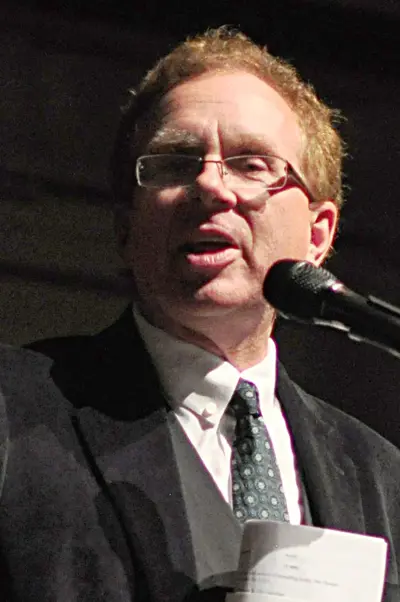
John Harrison Nichols is a liberal / progressive American journalist and author. He is the National Affairs correspondent for The Nation and associate editor of The Capital Times. Books authored or co-authored by Nichols include The Genius of Impeachment and The Death and Life of American Journalism.
