Joseph Story Quotes
Impeachment was not so much designed to punish an offender as to secure the state….
Joseph Story, 1779-1845, U. S. Supreme Court Justice, Quoted in The Substantive Law of Presidential Impeachment, Presented to the U.S Senate in 1973 for the impeachment of Richard Nixon
Sourced by: Eigen's Political and Historical Quotations

The convention turned down the constitution and would not ratify it until the Bill of Rights was passed later.


Parliament had developed a formal mechanism of removing officials in extreme circumstances. It was borrowed for the U. S. Constitution. See {584256}.

In England, the King was above the law. However, impeachment was a tool that could be used against his favorite ministers. In debating the United State Constitution one of the first questions to be determined was whether impeachment could be a tool used against the President or like, England, only the other government officials. Franklin urged the President be included. See also Mason: {584246}.


Senator Grimes thought that Andrew Johnson was a terrible President, but when the House of Representatives impeached President Johnson and he was tried before the Senate, Grimes voted for acquittal. His reason for the his vote was he thought that the Constitution did not provide for the removal if a President just because he has “Unacceptable.” Johnson survived removal from office by a single vote and had Grimes not been so principled about the Constitution, Johnson would have been removed from office. On the other hand, Johnson was a terrible President and many of the nations racial problems in later years emanated from his actions and inactions while in office.


This article of impeachment is quoted often because it shows that criminal activity or violation of a law was not required for impeachment. The time was close to the adoption of the Constitution and presumably reflected sentiment of the founders. Chase however was acquitted as the Senate did not agree that the charges had been proven.
The debate was about the unlimited pardon power of the President. Madison argued that the check was the impeachment power. However, Presidents had tended to make large numbers of pardons just before they leave office so the impeachment power works only as a check for the beginning and middle part of their term.


Hamilton pointed out that there is always a philosophical conflict between impeachment of an elected official and the right of the people to choose their own representatives. Both have very important and noble reasons supporting them. The founding fathers compromised by allowing impeachment, but making it very difficult.


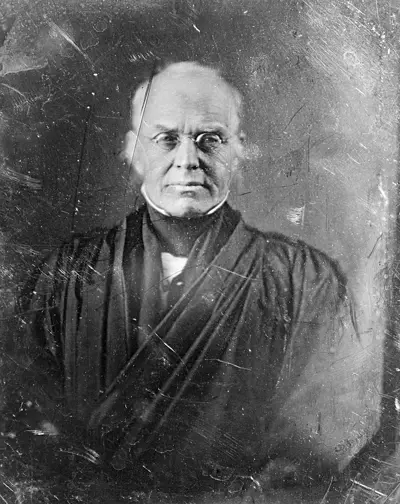
Joseph Story was an American lawyer and jurist who served on the Supreme Court of the United States from 1812 to 1845, during the Marshall Court and early-Taney Court eras. He is most remembered for his opinions in Martin v. Hunter's Lessee and The Amistad case, and especially for his magisterial Commentaries on the Constitution of the United States, first published in 1833. Dominating the field in the 19th century, this work is a cornerstone of early American jurisprudence. It is the second comprehensive treatise on the provisions of the U.S. Constitution and remains a critical source of historical information about the forming of the American republic and the early struggles to define its law.
