William S. Cohen Quotes
Congress ... is far more than the simple, limited advisory council that most Presidents would like to maintain.
William S. Cohen, U.S. Senator (Republican, ME), U. S. Secretary of Defense, Senate speech, March 3, 1988
Sourced by: Eigen's Political and Historical Quotations


When the Senate was debating the Gulf of Tonkin Resolution, which would empower the President to take "all necessary measures" to repel any armed attack on U. S. forces, Senator Morse was one of only two Senators opposing the resolution:


His main reason for believing this is that all appropriations bills must be initiated by the House of Representatives. Lobbyists therefore often give the House more attention than the Senate.


President Abraham Lincoln had pocket vetoed his own party's reconstruction bill in the midst of an election year.


This notion seems to have first been expressed by Edward S. Corwin in 1940


Vidal, a staunch liberal held this view along with many ultra conservatives end extreme liberals. The constitution requires the Congress to declare war, but they have not done so for any of the wars since WWII. The President assumed the war power. And the only coherent budgets began.

His role was the equivalent of the Mayor of Washington DC. Even though the Congress had generally been the most powerful branch of the government, public opinion on this was beginning to shift at the turn of the 20th century.

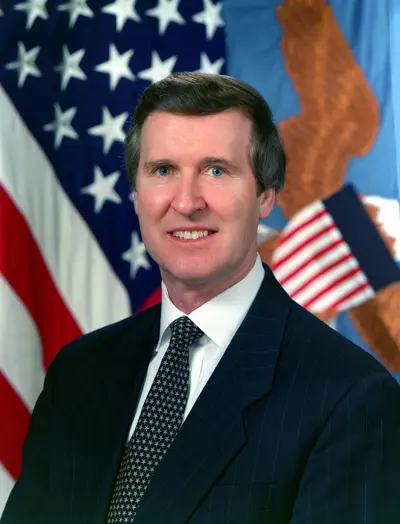
William Sebastian Cohen is an American politician, lawyer and author from the U.S. state of Maine. A Republican, Cohen served as both a member of the United States House of Representatives (1973–1979) and Senate (1979–1997), and as Secretary of Defense (1997–2001) under Democratic President Bill Clinton.
