Gore Vidal Quotes
Congress no longer declares war or makes budgets. So that's the end of the constitution as a working machine.
Vidal, a staunch liberal held this view along with many ultra conservatives end extreme liberals. The constitution requires the Congress to declare war, but they have not done so for any of the wars since WWII. The President assumed the war power. And the only coherent budgets began.
Gore Vidal, 1925 – 2012, Author & Unsuccessful Candidate for Congress, "America First? America Last? America at Last?," Lowell Lecture, Harvard University (20 April 1992
Sourced by: Eigen's Political and Historical Quotations

In 1949 the NATO treaty was signed. There was concern that a phrase in the treaty authorizing signatories to take "such action as it deems necessary, including the use of armed force" would undermine Congress's powers:


When the Senate was debating the Gulf of Tonkin Resolution, which would empower the President to take "all necessary measures" to repel any armed attack on U. S. forces, Senator Morse was one of only two Senators opposing the resolution:


This quotation was the beginning of a struggle between Congress and the Presidency over war powers. In this case, President Jefferson had sent a squadron of American ships to protect American Shipping from Arab Corsairs who preyed on shipping and captured crews and passengers of all nations to hold for ransom or put into slavery. The American ships, instead of only providing defense, attacked some of the ships of the Bey and freed a captured American frigate and crew. Jefferson acknowledged that the act was a grey area and asked for authority more authority for the Executive Branch to initiate action. The balance of authority for war and/or defense has been struggled over ever since.


The view that the Supreme Court was the final arbiter of constitutional controversies was not held in early America.


The Congress over the last century has ceded much of its Constitutional power to the President. Congress has much power to check the President, but just as Congress has not been very competent at legislating, oversight, and conducting hearings and investigations, it has not organized itself to use the powers it has very well.

Jefferson and many others thought the original drafting of the Constitution was deficient in not explicitly protecting rights from the government. See {586024}. When it came time for ratification, it was clear that ratification would not take place unless that was remedied and the Bill of Rights made the ratification possible by satisfying many critics of whom Jefferson was but one. Note that the protection sought was from the President and the Congress.

President George W. Bush had ordered NSA agents to bug the phones and email of American citizens who might have been talking with an overseas party or e-mailing them out of the country. The administration thought that American citizens might be part of terrorist sleeper cells or unwittingly were aiding terrorists. The law prohibited such activity—where American citizens were involved—without getting a court order. However, the President claimed that he had the inherent power as commander in chief of exempting the court requirement. Others maintained that even the President is not above the law. What was the big puzzle was that there was a secret court Congress had established just for such cases, but the administration instead decided to bypass the court.

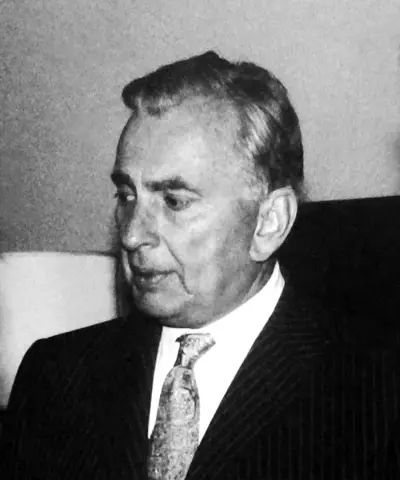
Eugene Luther Gore Vidal was an American writer and public intellectual known for his epigrammatic wit, patrician manner, and polished style of writing. Vidal was openly bisexual and his novels often dealt with LGBT characters, which was unusual at the time. Beyond literature, Vidal was heavily involved in politics. He twice sought office—unsuccessfully—as a Democratic Party candidate, first in 1960 to the United States House of Representatives (for New York), and later in 1982 to the U.S. Senate (for California).
