Joseph Cannon Quotes
When Congress consents to the Executive making the budget it will have surrendered the most important part of a representative government.
Joseph Cannon, 1836-1926, U. S. Congressman (Republican, IL), Speaker of the House, "The National Budget," Harper's Magazine, October 1919
Sourced by: Eigen's Political and Historical Quotations


Vidal, a staunch liberal held this view along with many ultra conservatives end extreme liberals. The constitution requires the Congress to declare war, but they have not done so for any of the wars since WWII. The President assumed the war power. And the only coherent budgets began.


President Abraham Lincoln had pocket vetoed his own party's reconstruction bill in the midst of an election year.


Bybee, then and Assistant Attorney General, took the legal position that the President could order the torture of enemy combatants regardless of Congressional laws prohibiting torture. Two years later the memo’s recipient, Alberto Gonzalez, in his confirmation hearings as Attorney General, repudiated the memo, then stating that the President was not above the law and had to obey the laws of Congress that apply to the military.


The view that the Supreme Court was the final arbiter of constitutional controversies was not held in early America.


When the Senate was debating the Gulf of Tonkin Resolution, which would empower the President to take "all necessary measures" to repel any armed attack on U. S. forces, Senator Morse was one of only two Senators opposing the resolution:

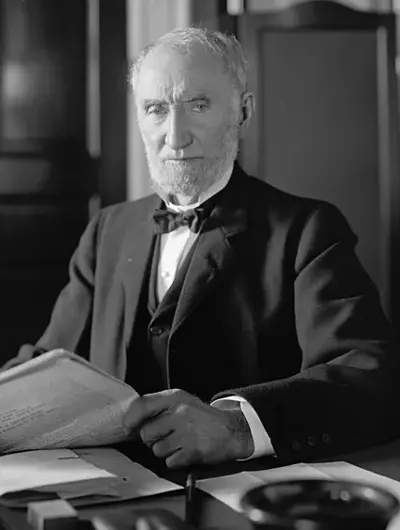
Joseph Gurney Cannon was a United States politician from Illinois and leader of the Republican Party. Cannon served as Speaker of the United States House of Representatives from 1903 to 1911, and many consider him to be the most dominant Speaker in United States history, with such control over the House that he could often control debate. The Cannon House Office Building, the oldest congressional office building, completed in 1908, was named for him in 1962.
