William E. Jenner Quotes
If the president can make whatever policy he likes, we are governed not by law, but by the arbitrary whims of one man ...
William E. Jenner, 1908-1985, U. S. Senator (Republican, IN), Senate debate, March 19, 1951
Sourced by: Eigen's Political and Historical Quotations


This was the President’s original role regarding legislation. However, in the 20th century, Presidents have become more active and suggest laws and often initiate the process and then end it by signing the law that he suggested and shepherded through the Congress. But this was never the vision of the Founding Fathers, but since it is not addressed in the Constitution is not an unconstitutional process.


Bartolo was the most famous legal expert of his day and for many years thereafter as he died at the age of 44—the height of his career. In Italy, Spain and other nations of Europe there were statutes passed that said if there was no precedent in Roman Law, the writings of Bartolo should dictate the law.

At the time of this statement most people thought that Bush was joking. But by the end of his Presidency many looked back on the quote and thought that Bush had such preferences. He unilaterally took the country into the Iraq War and assumed Presidential Powers that no other president had ever attempted. Most serious, his administration actually took the formal legal position that the President did not have to obey the law if he unilaterally thought that it was not in the nation’s interest from the point of view of the Commander in Chief. So many debate whether this quotation was a light hearted joke of a harbinger of his real feelings about the Presidency.

President Abraham Lincoln had pocket vetoed his own party's reconstruction bill in the midst of an election year.


President Coolidge had nominated Charles Beecher Warren as Attorney General but the Senate with his own party in the majority rejected the nomination as Warren had been closely connected with the Sugar Trust. Coolidge, refused to accept the Senate decision and renominated Warren and threatened that if the Senate would not confirm Warren, be would give him a recess appointment after the Senate adjourned:. The statement was written for a Senate speech but never delivered as such. Warren was rejected by the Senate a second time, and the President indeed offered him a recess appointment, but Warren refused.


Alberto Gonzalez, White House Counsel and later Attorney General who was forced to resign and David S. Addington, Counsel to the Vice President, had come up with a novel view of the powers of the presidency. They argued that since the President is the Commander in Chief, in a war situation or intelligence gathering thereto, has the Constitutional responsibility for that function, he need not obey any laws of Congress as in the conduct of the war Congress would be impinging on the Constitutional separation of powers which itself was prohibited by the Constitution. The argument did not find any significant legal support but for a while the George W. Bush White House behaved as if this were the law, despite the fact that even in the American Revolution and the War of 1812 Congress passed laws regulating the conduct of the armed forces as is provided for in other parts of the Constitution. Yet even Goldsmith would allow the President some powers that many think are unconstitutional and/or belong to Congress. See {32436}.

The World Trade Center and the Pentagon had been attacked by terrorists. The Vice President and other White House senior staff had followed procedure and gone to the protected bunker in the basement of the White House. Cheney was right in that he and the President instituted many illegal practices and taking power from Congress and the Courts. However, the things they elected to do to skirt if not defy the law, were not even good policy and Cheney and Bush became the “government of men” but the result was one of the worst and least popular administrations.


When the Senate was debating the Gulf of Tonkin Resolution, which would empower the President to take "all necessary measures" to repel any armed attack on U. S. forces, Senator Morse was one of only two Senators opposing the resolution:

See Louis Brandeis for a later judicial interpretation of this view.

See {635809} for an additional view on this act.


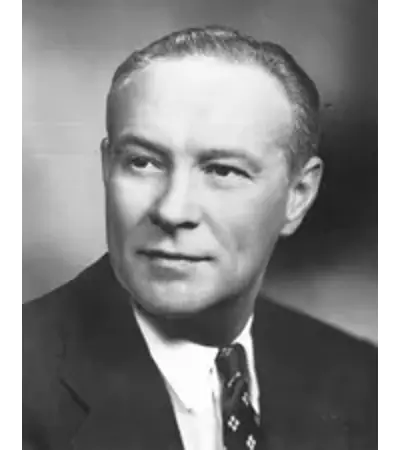
William Ezra Jenner was an American lawyer and politician from the state of Indiana. A Republican, Jenner was an Indiana state senator from 1934 to 1942, and a U.S. Senator from 1944 to 1945 and again from 1947 to 1959. In the Senate, Jenner was a supporter of McCarthyism.
