Rutherford B. Hayes Quotes
... a consolidation of unchecked and despotic power in the House of Representatives ...
Rutherford B. Hayes, 1822-1893, 19th President of the United States (Republican, OH), Remarking on the effect of the rules of the House of Representatives, Quoted in Nelson, The Roots of American Bureaucracy, Harvard University Press, 1982
Sourced by: Eigen's Political and Historical Quotations


It didn't take long in early America for legislative caucuses to spring up:
There was a rumor that Napoleon BonaparteII, Emperor of the French, was seriously ill, and when asked what the complaint was, a distinguished foreign guest remarked:


Porfirio Diaz - the longtime dictator of Mexico stole the election of 1910 and had his opponent Francisco Madero arrested and imprisoned. Madero got out, crossed the border to San Antonio, and issued this declaration which started the Mexican Revolution. See {613620} for the statement that declared the Revolution.


Madison went on to observe that in a democracy, the real power may reside in the majority of the population, and in such a case the tyranny of the majority is the danger.


Arguing the need to limit the power of the legislature:

See Louis Brandeis for a later judicial interpretation of this view.


Honore Gabriel Victor Requiti. The French King had just opened the French National Assembly which contained deputies (delegates) from the clergy, the nobility and the people. The King had made what some deputies thought was a very constructive and responsible speech opening the assembly. Mirabeau observed that as long as there was an absolute monarch in place, even a benign one. It was the presence of a monarch itself that was evil.


At the time of this statement most people thought that Bush was joking. But by the end of his Presidency many looked back on the quote and thought that Bush had such preferences. He unilaterally took the country into the Iraq War and assumed Presidential Powers that no other president had ever attempted. Most serious, his administration actually took the formal legal position that the President did not have to obey the law if he unilaterally thought that it was not in the nation’s interest from the point of view of the Commander in Chief. So many debate whether this quotation was a light hearted joke of a harbinger of his real feelings about the Presidency.

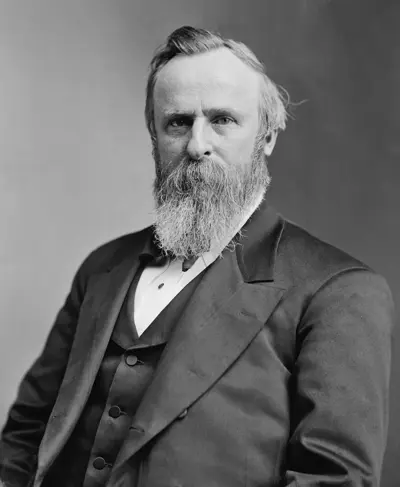
Rutherford Birchard Hayes was an American politician and attorney who served as the 19th president of the United States from 1877 to 1881, after serving in the U.S. House of Representatives and as governor of Ohio. A lawyer and staunch abolitionist, he had defended refugee slaves in court proceedings during the antebellum years. He negotiated the political agreement to end federal support of Reconstruction.
