John Stuart Mill Quotes
In domestic as in political tyranny, the case of absolute monsters chiefly illustrates the institution by showing that there is scarcely any horror which may not occur under it if the despot pleases
John Stuart Mill, 1806-1873, Member of Parliament, British Political Economist, The Subjugation of Women, 1869
Sourced by: Eigen's Political and Historical Quotations


Arguing the need to limit the power of the legislature:


Bartolo was the most famous legal expert of his day and for many years thereafter as he died at the age of 44—the height of his career. In Italy, Spain and other nations of Europe there were statutes passed that said if there was no precedent in Roman Law, the writings of Bartolo should dictate the law.

Porfirio Diaz - the longtime dictator of Mexico stole the election of 1910 and had his opponent Francisco Madero arrested and imprisoned. Madero got out, crossed the border to San Antonio, and issued this declaration which started the Mexican Revolution. See {613620} for the statement that declared the Revolution.


Historically, most dictators have announced their worst intentions and in many cases were not believed by much of the world who then learned that they had made a serious error.


Referring to the autocratic President of Turkey, Recep Tayyip Erdogan.

The Priest was the right wing demagogic radio host of his day. Virulently anti-Semitic and anti-Black, he was threatened with excommunication by the Catholic Church, which finally ordered him to cease us weekly radio show and stop the political hate.


Eggleston was an accomplished writer who had served in the Confederate army of the Civil War. 20 year after the war he wrote a series of articles for the prestigious Northern Atlantic Monthly trying to convey the war from the Southerner’s point of view.


This is the argument—an essence of Fascism—of every dictator from Julius Caesar onward. See {640792} for more of his views on dictators.
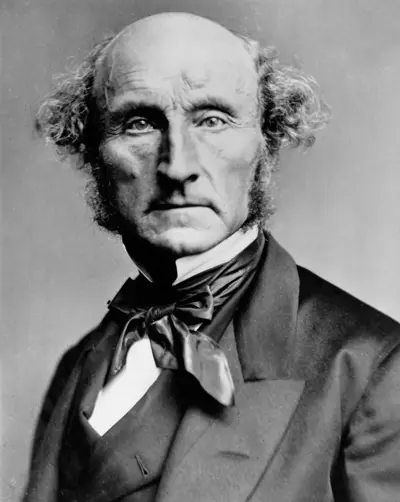
John Stuart Mill, usually cited as J. S. Mill, was an English philosopher, political economist, Member of Parliament, and civil servant. One of the most influential thinkers in the history of classical liberalism, he contributed widely to social theory, political theory, and political economy. Dubbed "the most influential English-speaking philosopher of the nineteenth century", he conceived of liberty as justifying the freedom of the individual in opposition to unlimited state and social control.
