JOHN RANDOLPH

Chase a Supreme Court justice at the time was a very partisan Federalist. The Senate was controlled by the Democratic Republicans. Randolph, then a member of the House of Representatives, orchestrated the impeachment of Chase because of his extreme partisanship. The Senate in trying the case had to decide for the first time what “high crimes and misdemeanors” the actually means in terms of impeachment. A number of the Democratic Republicans joined the Federalists in taking the view that however undesirable the Supreme Court justice’s partisanship would be, that did not reach the threshold of a “high crime and misdemeanor.” Chase was acquitted. In this sense this impeachment trial was similar to that of President William Clinton almost 200 years later. The behavior was undesirable but did not amount to a high crime and misdemeanor, Clinton was also acquitted.
When the Republican leadership in 2008 stated that the Republican’s primary objective was to prevent the re-election of Barack Obama, it was not the first time that American politicians admitted that their major objective was to cripple an administration. This quotation shows a very early example. See {592642} for Adams view of Senator Randolph.
He was chairman of a committee studying the West. Even though a Virginian he supported the exclusion of slaves in the Ohio Territory.
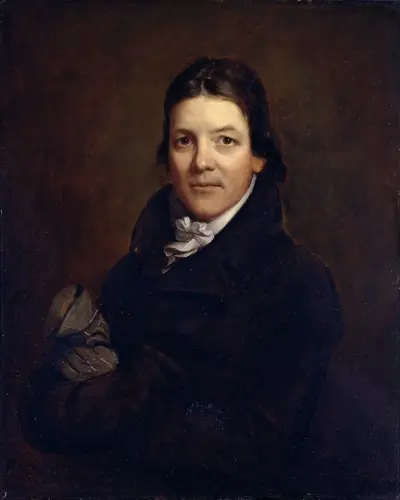
John Randolph, commonly known as John Randolph of Roanoke, was an American planter, and a politician from Virginia, serving in the House of Representatives at various times between 1799 and 1833, and the Senate from 1825 to 1827. He was also Minister to Russia under Andrew Jackson in 1830. After serving as President Thomas Jefferson's spokesman in the House, he broke with the president in 1805 as a result of what he saw as the dilution of traditional Jeffersonian principles as well as perceived mistreatment during the impeachment of Samuel Chase, in which Randolph served as chief prosecutor. Following this split, Randolph proclaimed himself the leader of the "Old Republicans" or "Tertium Quids", a wing of the Democratic-Republican Party who wanted to restrict the role of the federal government. Specifically, Randolph promoted the Principles of '98, which said that individual states could judge the constitutionality of central government laws and decrees, and could refuse to enforce laws deemed unconstitutional.
