John Randolph Quotes
Samuel Chase is tending to prostitute the high judicial character with which he was invested, to the low purpose of an electioneering partisan
Chase a Supreme Court justice at the time was a very partisan Federalist. The Senate was controlled by the Democratic Republicans. Randolph, then a member of the House of Representatives, orchestrated the impeachment of Chase because of his extreme partisanship. The Senate in trying the case had to decide for the first time what “high crimes and misdemeanors” the actually means in terms of impeachment. A number of the Democratic Republicans joined the Federalists in taking the view that however undesirable the Supreme Court justice’s partisanship would be, that did not reach the threshold of a “high crime and misdemeanor.” Chase was acquitted. In this sense this impeachment trial was similar to that of President William Clinton almost 200 years later. The behavior was undesirable but did not amount to a high crime and misdemeanor, Clinton was also acquitted.
John Randolph, 1773-1833, U. S. Congressman & U. S. Senator (Democratic Republican, VA), U. S. Minister to Russia
Sourced by: Eigen's Political and Historical Quotations


This article of impeachment is quoted often because it shows that criminal activity or violation of a law was not required for impeachment. The time was close to the adoption of the Constitution and presumably reflected sentiment of the founders. Chase however was acquitted as the Senate did not agree that the charges had been proven.

The concern of extreme wings of various parties with judicial activism is not limited to the United States.


Referring to his opponent, John McClellan. Attack campaigning and slandering one’s opponent has a long history in American Politics.

President George W. Bush, to justify the invasion of Iraq had told the public that the Iraqi regime was developing nuclear weapons and other weapons of mass destruction, and had participated in the September 11 attack on the United States by assisting Al Qaeda. It turned out that these statements were false. The administration claimed that their error was well intentioned and the result of faulty intelligence. Opponents claimed that the administration officials knew that they were exaggerating and had pressured the intelligence agencies to create intelligence conclusions that supported their story.


Her co-leader, Martin J. Healy, was accused of accepting a bribe from a judge in exchange for his appointment. What makes this quotation particularly interesting is the fact that she was speaking before a reform organization, yet it is clear that Mathews herself saw no immorality in party officials accepting kickbacks. One of the major problems in reform was that most of the Tammany Hall leaders and voters had a different morality from the reformers and many genuinely thought that the situation as it existed was only “fair.” Reform, as with civil rights, required a transformation of public opinion and sense of right and wrong. See {626674} for one of her solutions to political corruption.
In his boisterous dissent he read from the bench in the EPA v. EME Homer City case, Supreme Court Justice Antonin Scalia, made a mistake and in citing a previous opinion he had written, he made an error recalling what he had written previously. Critics of the justice not only castigated him but made fun of his seemingly foolish error that a law student should not make. Whalen’s quotation is important because it illustrated the highly partisan tone in American politics at that. Whalen, a partisan conservative explains how he would do the same thing if a liberal judge made a mistake. The error was corrected in the final published version of the opinion, and it did not affect the logic of the dissent or even the factual arguments for the dissent. Yet the quest for partisan advantage and trashing a political opponent was so in vogue that a minor mistake was treated as a major political scandal. The end of the 20th century and the beginning of the 21st were not the most partisan and nasty era of American politics but it was one of the worst.
He had been reporting from Egypt at the time. There was no judicial independence, and the judges were generally corrupt and incompetent. The system operated as a tradeoff. The government would not investigate and punish the corruption and bribery in the private cases if the judges would always rule for the government in the cases they brought. The system was particularly pernicious in that Egypt did not depend on the jury of peers system so the judges had great power in judicial proceedings.


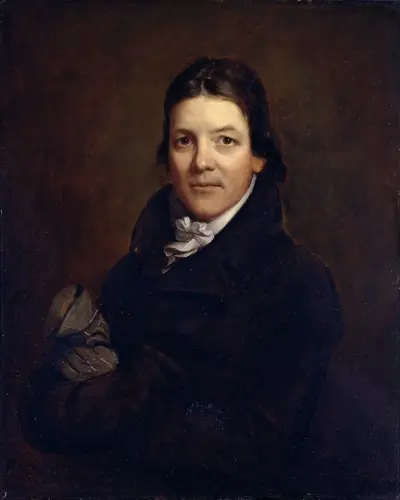
John Randolph, commonly known as John Randolph of Roanoke, was an American planter, and a politician from Virginia, serving in the House of Representatives at various times between 1799 and 1833, and the Senate from 1825 to 1827. He was also Minister to Russia under Andrew Jackson in 1830. After serving as President Thomas Jefferson's spokesman in the House, he broke with the president in 1805 as a result of what he saw as the dilution of traditional Jeffersonian principles as well as perceived mistreatment during the impeachment of Samuel Chase, in which Randolph served as chief prosecutor. Following this split, Randolph proclaimed himself the leader of the "Old Republicans" or "Tertium Quids", a wing of the Democratic-Republican Party who wanted to restrict the role of the federal government. Specifically, Randolph promoted the Principles of '98, which said that individual states could judge the constitutionality of central government laws and decrees, and could refuse to enforce laws deemed unconstitutional.
