Kenneth Lay Quotes
Could it be that my indictment -- curiously issued two weeks before the Democratic National Convention -- is largely political?
Kenneth Lay, 1942-2006, CEO Enron, Statement after he was indicted in the largest business fraud and collapse in American history
Sourced by: Eigen's Political and Historical Quotations


This quotation illustrates a political phenomenon that used to be common in American politics—the spoils system where government activities, positions, contracts and grants were awarded to the supporters of the winning party and not to the opponents. In modern times government contracts were supposed to have been awarded on the basis of qualifications and price and not conditioned on political support. In this rare quotation, the secretary admitted to violating his own Department’s regulations and using politics as a criteria where existing laws prohibited that.

Chase a Supreme Court justice at the time was a very partisan Federalist. The Senate was controlled by the Democratic Republicans. Randolph, then a member of the House of Representatives, orchestrated the impeachment of Chase because of his extreme partisanship. The Senate in trying the case had to decide for the first time what “high crimes and misdemeanors” the actually means in terms of impeachment. A number of the Democratic Republicans joined the Federalists in taking the view that however undesirable the Supreme Court justice’s partisanship would be, that did not reach the threshold of a “high crime and misdemeanor.” Chase was acquitted. In this sense this impeachment trial was similar to that of President William Clinton almost 200 years later. The behavior was undesirable but did not amount to a high crime and misdemeanor, Clinton was also acquitted.


In the razor thin 2000 Presidential election the Republican controlled Florida legislator called a special session to name their own electors to go to the electoral college. The Governor, Jeb Bush, was the brother of the Republican candidate.


It took until the Presidency of Theodore Roosevelt until monopolies were regulated. Like many of the rapacious businessmen of his era, bribery of public officials was so common that he had no problem admitting this to a reporter who was interviewing him. His father Cornelius, one of the great, creative industrialists of America, was not at all of the same mindset or the same corrupt character and saw corporations and the Railroads as having an important role in America with substantial obligations to the society which enabled the economic development and supported the railroads. He described his son as a “blockhead”. William goes down in American history as the arrogant industrialist and capitalist whose wealth was produced by his talent of being born to the right father who built the great empire. At that time the bribery of members of Congress was direct with cash going directly into their pockets, unlike modern times where it is indirect in the form of Campaign contributions.

Mises is one of the very few economic conservatives who opposed companies getting involved with lobbying or politics in any way. He, like some others, saw the negative public effect that business produces when it does get deeply involved in politics, but he uniquely observed that the businesses themselves suffered as a result of the involvement in politics. Obviously very few business leaders of the 21st century agreed with Mises’ earlier views.

He had been reporting from Egypt at the time. There was no judicial independence, and the judges were generally corrupt and incompetent. The system operated as a tradeoff. The government would not investigate and punish the corruption and bribery in the private cases if the judges would always rule for the government in the cases they brought. The system was particularly pernicious in that Egypt did not depend on the jury of peers system so the judges had great power in judicial proceedings.


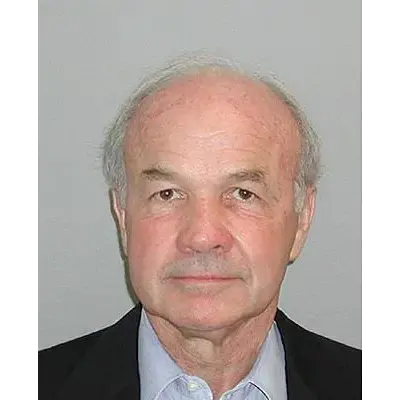
Kenneth Lee Lay was the founder, CEO and chairman of Enron who was heavily involved in the eponymous accounting scandal that unraveled in 2001 into the largest bankruptcy ever to that date. Lay was indicted by a grand jury and was found guilty of 10 counts of securities fraud at trial. Lay died in July 2006 while vacationing in his house near Aspen, Colorado, three months before his scheduled sentencing. A preliminary autopsy reported Lay died of a myocardial infarction (heart attack) caused by coronary artery disease; his death resulted in a vacated judgment.
