William Henry Vanderbilt Quotes
Anti-monopoly is a movement inspired by a set of fools and black-mailers. To be sure, there are some men in it whose motives are good, if their sense is not. When I want to buy up any politician, I always find the Anti-Monopolists the most purchasable. They don't come so high
It took until the Presidency of Theodore Roosevelt until monopolies were regulated. Like many of the rapacious businessmen of his era, bribery of public officials was so common that he had no problem admitting this to a reporter who was interviewing him. His father Cornelius, one of the great, creative industrialists of America, was not at all of the same mindset or the same corrupt character and saw corporations and the Railroads as having an important role in America with substantial obligations to the society which enabled the economic development and supported the railroads. He described his son as a “blockhead”. William goes down in American history as the arrogant industrialist and capitalist whose wealth was produced by his talent of being born to the right father who built the great empire. At that time the bribery of members of Congress was direct with cash going directly into their pockets, unlike modern times where it is indirect in the form of Campaign contributions.
William Henry Vanderbilt, 1821–1885, Railroad Owner & Executive, Heir of the Great Industrialist Cornelius Vanderbilt, Quoted in Clarence P. Dresser, "Vanderbilt in the West", New York Times, October 9. 1882
Sourced by: Eigen's Political and Historical Quotations


Clark, after becoming one of the richest men in America, wanted to go into National Politics, but most people hated him so he could never win elected office. At the time, Montana selected their Senators by a vote of the State Legislature. So Clark bribed enough members of the legislature to become the Senator. However, the bribery scheme became a public scandal and the Senate refused to seat him. So the legislature had another vote in the next legislative session and Clark won again, and that time no one had the evidence of the bribes. But then, more about Clark became known, and he just served the one term.


1st Earl of Beaconsfield


CREEP in the Nixon Campaign. He was himself a convicted Watergate conspirator. Mitchell did not approve the plan, but did not fire Liddy either.


The United States had just ousted the popularly elected leader Patrice Lumumba {640611}, and backed Mobuto. Lumumba was an idealist who was not corrupt at all, but were not so sure about our new protégé. Sadly he turned out to be one of the worst kleptocrats of all time, and he stole with more United States money than we gave to many nations in toto. Many believe that one of the reasons, corruption of our “allied” leaders was so bad lies in the wording of this cable. Note that to the State Department writers there was “normal” corruption as opposed to excessive corruption. Once that view is taken there is a constant battle to determine whether each new act of corruption is “normal “ or not, and corruption is simply lessened by pushing back against the most abnormal schemes. These critics advocate a zero tolerance for corruption especially with United States AID money. The State Department has been ambivalent and have often used the corruption system to bribe leaders to obtain national objectives.


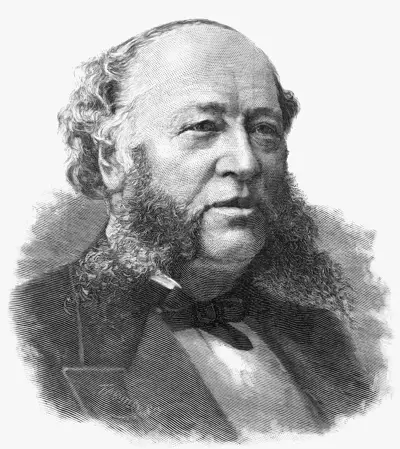
William Henry "Billy" Vanderbilt was an American businessman and philanthropist. He was the eldest son of Commodore Cornelius Vanderbilt, an heir to his fortune and a prominent member of the Vanderbilt family. Vanderbilt became the richest American after he took over his father's fortune in 1877 until his own death in 1885, passing on a substantial part of the fortune to his wife and children, particularly to his sons Cornelius II and William. He inherited nearly $100 million from his father. The fortune had doubled when he died less than nine years later.
