David Vitter Quotes
The United Nations has no business in our elections.
Vitter, David. "Vitter: UN Has No Business in U.S. Elections." Press Releases, Office of United States Senator David Vitter, 24 Oct. 2012.

Although opposed to monarchy himself, Langdon argued that a people had a right to select monarchical government if they chose. See {634001} for Rev. Dan Foster’s similar argument at in that period.


In Philadelphia, the state delegates had just started to vote for independence. The majority of each state delegation determined the vote for the state. Delaware had three delagates, but only two were in Philadelphia. Rodney, the third delegate from Delaware, had been attending a meeting in Dover when he received word that the other two Delaware delagates Thomas McKean and George Read were split—McKean for and Read against independence. Rodney immediately left for Philadelphia late on July 1. He rode all night in a thunderstorm to traverse the 80 miles to Philadelphia. He arrived in his spurs and riding boots and cast his famous vote and thus Delaware voted for Independence. After the vote, the next 2 days were spent drafting the Declaration of Independence and Rodney signed it on July 4. After Rodney returned to Delaware, he was ousted in the next election by conservative loyalists who felt that Rodney had betrayed them and England.

The United States was opposed to elections at the beginning of the Vietnam war. The Viet Min, the Russian and Chinese recognized government of Ho Chi Min, was extremely well organized as a result of their cohesive organization and victory over the French Colonialists. At the urging of the French, we supported the previous Vietnam Emperor who the French had supported. However his popularity was limited to Saigon and French Colonial centers. The majority of the population saw him as the collaborator who was propped up by the hated French. There was no way that the Communist Viet Min would lose in an election. There had been no time for the people to see what peacetime living under the communists was like, and what they knew of the Emperor, they did not like. It was important to keep Vietnam from falling into the hands of the Communists. Once they won one election they would control the machinery of government to be sure that they won all subsequent elections even if the people wanted a change in government. The German newspaper thought that we should stick to our principles and allow a free election and live with the consequences. In retrospect, we would be where we ended up anyway with the Communist Viet Min in totalitarian control of the country and we would have saved many lives and much money.


While this has been one of the great American principles of political philosophy, in reality we have on many occasions interfered when a people chose an enemy of the United States or made a choice of a government which would seize power and not allow any further free choices. However, from the time JFK made this statement to today, our foreign policy record has become much better on implementing this principle.


This statement became known as "The Truman Doctrine." Truman asked for $400 million to help Greece and Turkey fight stave off armed Communist minorities destabilizing their governments.


Borah in this quotation reflects a deeply held view of a minority of Americans who are opposed to any foreign force—“legal or moral”—influencing affairs in America. The concern is rarely stated with such eloquence. By Borah’s standards our participation in the United Nations is wrong and unwise.


The Ambassador without any authority from the State Department or the Congress engineered a group that staged a coup in Hawaii which overthrew the popular government monarchy and then “asked” to be ruled by the United States. Hawaii had been a stable independent nation, but many American businessmen and adventurers had designs on the valuable Hawaiian land. President Cleveland tried to remedy the situation {643147}, but it was too late. Haraii had become a U. S. territory and there was no going back.


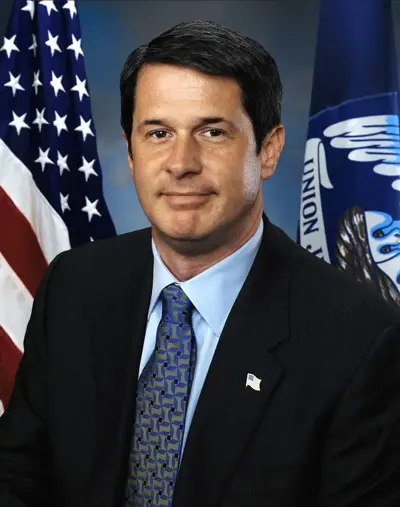
David Bruce Vitter is an American lobbyist, lawyer, and politician who served as United States Senator for Louisiana from 2005 to 2017.
