Daniel De Leon Quotes
The powers conferred by the Constitution upon the Executive enable him to shape the foreign policy of this nation almost independent of the Legislature. A scheming and unscrupulous President can involve the country in serious complications, commit it to an unwise policy, or at least render its foreign diplomacy ridiculous before Congress may have an opportunity to check him.
Daniel DeLeon, 1852-1914, Author and Socialist leader, To Business Men, National Committee of Republicans and Independents [Mugwumps], New York, September of 1884
Sourced by: Eigen's Political and Historical Quotations

This notion seems to have first been expressed by Edward S. Corwin in 1940

Alberto Gonzalez, White House Counsel and later Attorney General who was forced to resign and David S. Addington, Counsel to the Vice President, had come up with a novel view of the powers of the presidency. They argued that since the President is the Commander in Chief, in a war situation or intelligence gathering thereto, has the Constitutional responsibility for that function, he need not obey any laws of Congress as in the conduct of the war Congress would be impinging on the Constitutional separation of powers which itself was prohibited by the Constitution. The argument did not find any significant legal support but for a while the George W. Bush White House behaved as if this were the law, despite the fact that even in the American Revolution and the War of 1812 Congress passed laws regulating the conduct of the armed forces as is provided for in other parts of the Constitution. Yet even Goldsmith would allow the President some powers that many think are unconstitutional and/or belong to Congress. See {32436}.


The president did not act purely on his own. The operation in Libya was a NATO operation, not a U. S. operation. All NATO countries unanimously approved the enforcement of the No Fly zone and it was approved by the Security Council of the United Nations, Technically the operation was not war. NATO and the United States was asked to support the no fly zone by the Government of Libya which we and the other countries all recognized at the time. However, since the later part of the 19th century, America has debated exactly who and under what conditions can commit U. S. Troops to hostilities. The prerogatives of Congress in the war powers debate have eroded to the Presidency in the last 2 centuries and some, like Paul feel that the older balance should be restored.

Senators have throughout our history used their power of treaty ratification to encroach on the executive branch and participate in the actual negotiations of treaties. President’s like McKinley to avoid non ratification actually appointed 3 senators to his 5 man treaty negotiating team. The 2/3 super majority is a high hurdle for ratification and presidents have always tilted with the Senate on treaties.

to send troops to Cuba The problem in Cuba was not even a crisis for America. But the precedent became the beginning of a huge change in the balance of power between the President and Congress. Together with his huge popularity, Roosevelt could do almost anything and have public support, but the war powers—the authority to send American troops into harm’s way—started their profound shift from requiring the President to ask Congress to declare war and the President acting unilaterally which had become common by the 21st century.

This concept of Presidential powers greatly expanded the traditional power of the Presidency. To one degree or another this became the view of every president who followed until George W. Bush who went one large step further. He maintained that the President could do that which was specifically prohibited by law if the purpose was to perform a Constitutional duty.


On why the President should not be given the right to go to war without the approval of Congress:


This was the President’s original role regarding legislation. However, in the 20th century, Presidents have become more active and suggest laws and often initiate the process and then end it by signing the law that he suggested and shepherded through the Congress. But this was never the vision of the Founding Fathers, but since it is not addressed in the Constitution is not an unconstitutional process.


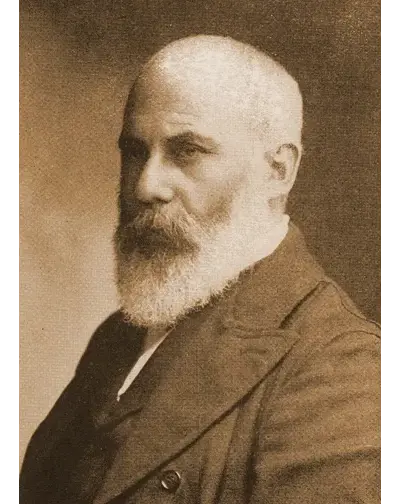
Daniel De Leon (/də ˈliːɒn/; December 14, 1852 – May 11, 1914), alternatively spelt Daniel de León, was a Curaçaoan-American socialist newspaper editor, politician, Marxist theoretician, and trade union organizer. He is regarded as the forefather of the idea of revolutionary industrial unionism and was the leading figure in the Socialist Labor Party of America from 1890 until the time of his death.[2] De Leon was a co-founder of the Industrial Workers of the World and much of his ideas and philosophy contributed to the creations of Socialist Labor parties across the world, including: Australia, the United Kingdom, Canada, and the Socialist Trade and Labor Alliance.
