Chester A. Arthur Quotes
It is provided by the Constitution that the President shall from time to time give to the Congress information of the state of the Union and recommend to their consideration such measures as he shall judge necessary and expedient.
Arthur, Chester A. "Second Annual Message." 4 Dec. 1882. A Compilation of the Messages and Papers of the Presidents, edited by James D. Richardson, vol. 8, Government Printing Office, 1898, p. 126.


The naval hero was approached as to his reception to a presidential draft. His famous response eliminated most interest in him. If Congress selected the President, he may well have won.

In 1908 William Randolph Hurst made public a series of letters showing that the senator was being paid large sums by the Standard Oil company and was also being instructed on pending legislation. See John Archbold. The senator was pressured out of public life:


When the Senate was debating the Gulf of Tonkin Resolution, which would empower the President to take "all necessary measures" to repel any armed attack on U. S. forces, Senator Morse was one of only two Senators opposing the resolution:


Alberto Gonzalez, White House Counsel and later Attorney General who was forced to resign and David S. Addington, Counsel to the Vice President, had come up with a novel view of the powers of the presidency. They argued that since the President is the Commander in Chief, in a war situation or intelligence gathering thereto, has the Constitutional responsibility for that function, he need not obey any laws of Congress as in the conduct of the war Congress would be impinging on the Constitutional separation of powers which itself was prohibited by the Constitution. The argument did not find any significant legal support but for a while the George W. Bush White House behaved as if this were the law, despite the fact that even in the American Revolution and the War of 1812 Congress passed laws regulating the conduct of the armed forces as is provided for in other parts of the Constitution. Yet even Goldsmith would allow the President some powers that many think are unconstitutional and/or belong to Congress. See {32436}.


Periodically in American history, there has been a struggle between the Executive Branch and the Senate for dominance. The Senate’s power is negative however. It can block things, but cannot directly make them happen. The President can do both.

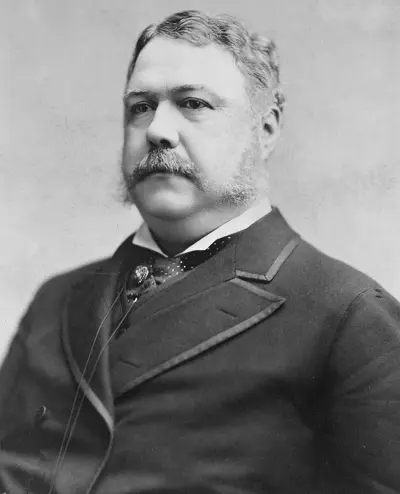
Chester Alan Arthur was an American attorney and politician who served as the 21st president of the United States from 1881 to 1885. Previously the 20th vice president, he succeeded to the presidency upon the death of President James A. Garfield in September 1881, two months after Garfield was shot by an assassin.
