Henry H. Bingham Quotes
Is there any statute that gives the President authority in any way to change the spelling?
There have been many power struggles between the Legislative and Executive branches, but one of the more humorous began on August 27, 1906. President Theodore Roosevelt directed the Public Printer to observe a new orthographic convention designed to simplify the spelling of English. A furor broke out as Congress fought against such a radical departure The President was defeated and so was "simplified spelling."
Henry H. Bingham, 1841-1912, U. S. Congressman (Republican, PA), Congressional debate, December 10, 1906
Sourced by: Eigen's Political and Historical Quotations


Alberto Gonzalez, White House Counsel and later Attorney General who was forced to resign and David S. Addington, Counsel to the Vice President, had come up with a novel view of the powers of the presidency. They argued that since the President is the Commander in Chief, in a war situation or intelligence gathering thereto, has the Constitutional responsibility for that function, he need not obey any laws of Congress as in the conduct of the war Congress would be impinging on the Constitutional separation of powers which itself was prohibited by the Constitution. The argument did not find any significant legal support but for a while the George W. Bush White House behaved as if this were the law, despite the fact that even in the American Revolution and the War of 1812 Congress passed laws regulating the conduct of the armed forces as is provided for in other parts of the Constitution. Yet even Goldsmith would allow the President some powers that many think are unconstitutional and/or belong to Congress. See {32436}.

See {635809} for an additional view on this act.


The President had authorized the NSA to spy Americans who might have been suspected of being themselves or being in contact with terrorists without obtaining permission of a court including the Foreign Intelligence Surveillance Act (FISA) special court that had been established for these cases. Instead the administration argues that it was inherent in the powers of the Presidency in time of war.

Opinion in case against the government for illegal CIA activities. The defense had been that the President had authorized and ordered the operations in question.


In a precursor to the 1948 unexpected 1948 Dewey defeat for the presidency, Charles Evans Hughes was favored to defeat Woodrow Wilson in 1916. Based on early returns in the East, New York Times and other newspapers had conceded the election to Hughes in their evening editions. Hughes retired early in his hotel. After midnight, a New York reporter called his suite. Hughes' son answered.


John Foster Dulles was the Secretary of State and brother Allen Dulles was head of the CIA.
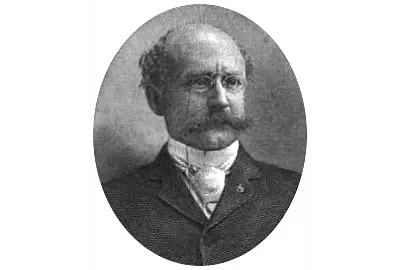
Henry Harrison Bingham was an American politician from Pennsylvania who served as a Republican member of the U.S. House of Representatives for Pennsylvania's 1st congressional district from 1879 to 1912. He was a Union Army officer in the American Civil War, fought in some of the key battles of the war and received the United States Military's highest award for valor, the Medal of Honor, for his actions at the Battle of the Wilderness.
