Charles Evans Hughes Quotes
The President cannot be disturbed. [The reporter quickly replied, "Well when he wakes up, just tell him he isn't President.
In a precursor to the 1948 unexpected 1948 Dewey defeat for the presidency, Charles Evans Hughes was favored to defeat Woodrow Wilson in 1916. Based on early returns in the East, New York Times and other newspapers had conceded the election to Hughes in their evening editions. Hughes retired early in his hotel. After midnight, a New York reporter called his suite. Hughes' son answered.
Charles Evans Hughes, 1889-1950, Son of the presidential candidate, Telephone conversation, November 8, 1916
Sourced by: Eigen's Political and Historical Quotations


There have been many power struggles between the Legislative and Executive branches, but one of the more humorous began on August 27, 1906. President Theodore Roosevelt directed the Public Printer to observe a new orthographic convention designed to simplify the spelling of English. A furor broke out as Congress fought against such a radical departure The President was defeated and so was "simplified spelling."
_0_PostageStamp_47x47.jpg "Chairman of the Joint Chiefs of Staff Navy Adm. Mike Mullen gives an interview to John Dickerson during the CBS news program Face the Nation in Washington, D.C., July 5, 2009. During the interview, Mullen discussed the wars in Iraq and Afghanistan, North Korea's recent missile tests and his recent visit to Russia. (DoD photo by Mass Communication Specialist 1st Class Chad J. McNeeley, U.S. Navy/Released)")


In 1995 the president had agreed with our allies to send troops to support a peace in Bosnia if there was one, but many in Congress attempted to block that possibility.

Alberto Gonzalez, White House Counsel and later Attorney General who was forced to resign and David S. Addington, Counsel to the Vice President, had come up with a novel view of the powers of the presidency. They argued that since the President is the Commander in Chief, in a war situation or intelligence gathering thereto, has the Constitutional responsibility for that function, he need not obey any laws of Congress as in the conduct of the war Congress would be impinging on the Constitutional separation of powers which itself was prohibited by the Constitution. The argument did not find any significant legal support but for a while the George W. Bush White House behaved as if this were the law, despite the fact that even in the American Revolution and the War of 1812 Congress passed laws regulating the conduct of the armed forces as is provided for in other parts of the Constitution. Yet even Goldsmith would allow the President some powers that many think are unconstitutional and/or belong to Congress. See {32436}.
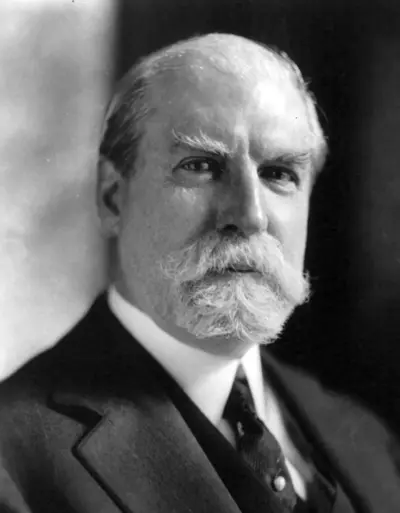
Charles Evans Hughes Sr. was an American statesman and politician who served as the 11th Chief Justice of the United States from 1930 to 1941. A member of the Republican Party, he was also the 36th Governor of New York, the Republican nominee in the 1916 presidential election, and the 44th United States Secretary of State.
