Herbert Hoover Quotes
The President of the United States will not stand and be questioned like a chicken thief by men whose names he does not even know.
Hoover was asked if he would take oral questions.
Herbert Hoover, 1874-1964, 31st President of the United States (Republican, IA), Quoted in Brinkley, Washington Goes to War, Knopf, 1988
Sourced by: Eigen's Political and Historical Quotations

He was responding to criticism that the media was bashing the President.


President George W. Bush had ignored a federal law and tapped the phones of Americans without probable cause and a warrant issued by a court. The President’s defenders argued that the President, as Commander in Chief, has the Constitutional responsibility to lead the military and protect the nation. Intelligence gathering is part of military activity. Therefore the intelligence gathering is a Constitutional duty and the Congress, under the separation of powers doctrine, may not interfere with the President’s Constitutional Duty to conduct intelligence. Under this doctrine, the President need not obey laws that he believes impinge on his management of the war effort and the defense of the nation. Most legal scholars believe that this argument is nonsense, but the George W. Bush administration has stated the doctrine and it was the subject of much litigation.


Fleischer had asked that the White House be given advance notice of any stories the New York Times might be covering in the future dealing with national security. As outlandish as this request may seem given the first amendment, it is a good illustration of the level of concern and panic of the George W. Bush White House who saw the situation as so fearful that that they initiated many constitutionally questionable practices. See {642527} for Fleischer’s request. New York Times has had a practice over the years of holding stories then they were persuaded that damage to the nation or to individuals would ensue as the result of publication at that time. However, the government has at times abused this policy as in the Pentagon Papers Case.


Dodd observed that FDR expanded the power of the Presidency to deal with the emergency of the Great Depression, and like most Americans hoped that these measures would succeed. The Supreme Court limited some of the power expansion to the Executive Branch, but was the start of the huge Presidential power expansion that would continue through the Cold War and the War on Terror by Presidents of both parties.

During his Ambassadorial confirmation hearings Helms lied about the role the CIA under his direction had played in the destabilization of Chile and the Allende administration. In 1977 he was convicted of perjury. He was not convicted for carrying out any presidential orders but for lying under oath to Congress. No President had ordered him to do that. The CIA had covertly aided in a coup usurping the popular, elected President Salvador Allende—today a national hero in Chile. We picked the wrong side in the political battle in Chile. We helped a military dictator overthrow a democratically elected president. See {622168}.

The President had authorized the NSA to spy Americans who might have been suspected of being themselves or being in contact with terrorists without obtaining permission of a court including the Foreign Intelligence Surveillance Act (FISA) special court that had been established for these cases. Instead the administration argues that it was inherent in the powers of the Presidency in time of war.

And the New York press is probably the most difficult and cynical in the world.


Hamilton thought that the Executive Branch should be co-equal with the Judicial Branch and lifetime tenure should apply to both. This quotation is very important as we consider developing countries and emerging democracies. Some in the third world have Presidents for Life—a concept that most democracies scoff at. But the stability and the independence was important enough to some of the Founding Fathers was actually advocated and considered as we formed the American Democracy.

See {635809} for an additional view on this act.

This was the President’s original role regarding legislation. However, in the 20th century, Presidents have become more active and suggest laws and often initiate the process and then end it by signing the law that he suggested and shepherded through the Congress. But this was never the vision of the Founding Fathers, but since it is not addressed in the Constitution is not an unconstitutional process.


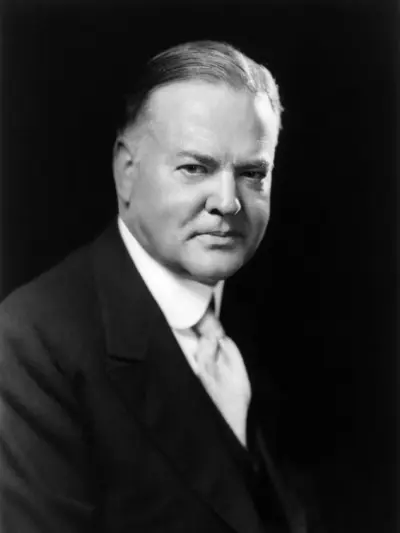
Herbert Clark Hoover was an American politician, businessman, and engineer, who served as the 31st president of the United States from 1929 to 1933. A member of the Republican Party, he held office during the onset of the Great Depression. Before serving as president, Hoover led the Commission for Relief in Belgium, served as the director of the U.S. Food Administration, and served as the third U.S. Secretary of Commerce.
