Neal Katyal Quotes
Every time a president invokes executive privilege, there are three relevant audiences he has to think about: the courts, Congress, and the public.
Katyal, Neal. Interview with Rachel Maddow. The Rachel Maddow Show, MSNBC, 2019.


President George W. Bush had ignored a federal law and tapped the phones of Americans without probable cause and a warrant issued by a court. The President’s defenders argued that the President, as Commander in Chief, has the Constitutional responsibility to lead the military and protect the nation. Intelligence gathering is part of military activity. Therefore the intelligence gathering is a Constitutional duty and the Congress, under the separation of powers doctrine, may not interfere with the President’s Constitutional Duty to conduct intelligence. Under this doctrine, the President need not obey laws that he believes impinge on his management of the war effort and the defense of the nation. Most legal scholars believe that this argument is nonsense, but the George W. Bush administration has stated the doctrine and it was the subject of much litigation.


Alberto Gonzalez, White House Counsel and later Attorney General who was forced to resign and David S. Addington, Counsel to the Vice President, had come up with a novel view of the powers of the presidency. They argued that since the President is the Commander in Chief, in a war situation or intelligence gathering thereto, has the Constitutional responsibility for that function, he need not obey any laws of Congress as in the conduct of the war Congress would be impinging on the Constitutional separation of powers which itself was prohibited by the Constitution. The argument did not find any significant legal support but for a while the George W. Bush White House behaved as if this were the law, despite the fact that even in the American Revolution and the War of 1812 Congress passed laws regulating the conduct of the armed forces as is provided for in other parts of the Constitution. Yet even Goldsmith would allow the President some powers that many think are unconstitutional and/or belong to Congress. See {32436}.

The Congress over the last century has ceded much of its Constitutional power to the President. Congress has much power to check the President, but just as Congress has not been very competent at legislating, oversight, and conducting hearings and investigations, it has not organized itself to use the powers it has very well.


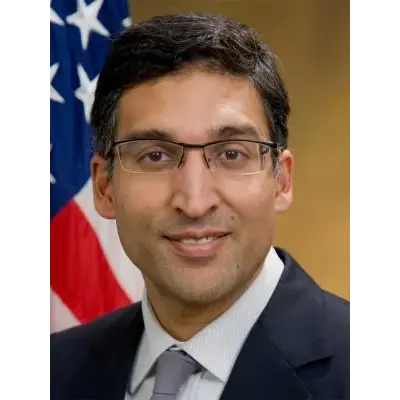
Neal Kumar Katyal is an American lawyer and academic. He is a partner at Hogan Lovells and the Paul and Patricia Saunders Professor of National Security Law at Georgetown University Law Center. During the Obama administration, Katyal served as Acting Solicitor General of the United States from May 2010 until June 2011. Previously, Katyal served as an attorney in the Solicitor General's office, and as Principal Deputy Solicitor General in the U.S. Justice Department. He is currently a Partner of Chamath Palihapitiya Social+capital Partnership and a member of the board of Social Capital Ventures Inc.
