Philip Agee Quotes
The CIA claims that secrecy is necessary to hide what it's doing from enemies of the United States ... the real reason for secrecy is to hide what the CIA is doing from the American people.
Agree resigned from the CIA in protest to its political position.
Philip Agee, 1935-2008, CIA Field Officer, Interview, Playboy, August 1975
Sourced by: Eigen's Political and Historical Quotations


When Bob Casey was the CIA Director, he the declassification of all the operational files of the WWII Office of Strategic Service. The huge collection is referred to as Record Book 2.6

Senator Dianne Feinstein, Chairman of the Senate Intelligence Committee, had released an unclassified Summary of the Committee Report on the CIA using torture and perverse treatment of suspect terrorists in the aftermath of the 9-11 attack on New York. Most Republicans argued vehemently that the Report should be classified and kept secret as the CIA behavior was so egregious, unpalatable, and morally reprehensible that there would be negative consequences including perhaps demonstrations and attacks against Americans in foreign countries. Moreover, Terrorist organizations would use the heinous CIA behavior as a recruiting tool for anti-American terrorists. McCain, who had himself been the victim of North Vietnamese torture cited the moral and ethical reasons to prohibit torture but also explained what has been proven over and over again that torture victims will tell the torturer any nonsense that they think the torturer might believe just to get obtain relief from the agony of the torture.


Every military establishment has secrets that they should maintain and are not always forthcoming with facts d explanations. However, the Pentagon is so large with so many layers that there are subgroups and vested interests, prevaricate and lie, even to their own superiors. No one knows how prevalent this is, but there have be a number of major incidents where the were lies and cover-ups—usually to prevent public embarrassment to some element of the military industrial complex.

He was referring to the massive surveillance NSA program whereby all telephone calls and most digital communications for every American was secretly tapped and stored in an NSA data base. The Senators of the Intelligence Oversight Committee received information in Classified executive sessions but they were not allowed to disclose anything that they learned in the briefings—even something as huge and probably unconstitutional as this program. Moreover, even when officials of the Intelligence Services lied under oath (see {634917}) in open session, the Senators could not disclose this fact.

The intelligence agencies had in many cases not shared critical information with the oversight committees and the White House and in a number of cases actually lied to them.

Kellis was the first of the Central Intelligence Agency whistle blowers. The President acted promptly on the letter and appointed General Jimmy Doolittle to conduct an investigation which confirmed the Kellis letter.


Intelligence agents tend to prefer covert activities to the less dramatic, non-exciting, activity of gathering and analyzing intelligence. Most national intelligence services tend to enlarge their portfolio to include covert activities regardless of what the national leaders intended. Because of the secrecy, they can often get away with this.

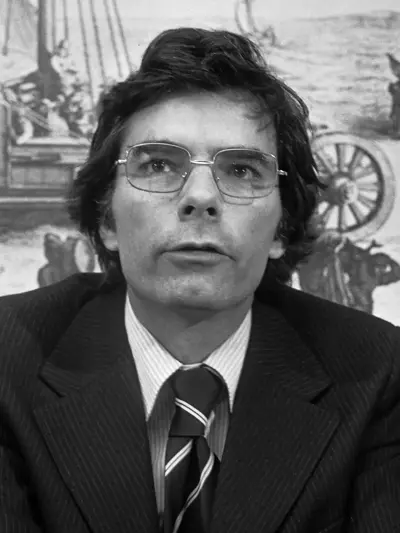
Philip Burnett Franklin Agee was a Central Intelligence Agency (CIA) case officer and writer of the 1975 book, Inside the Company: CIA Diary, detailing his experiences in the CIA. Agee joined the CIA in 1957, and over the following decade had postings in Washington, D.C., Ecuador, Uruguay and Mexico. After resigning from the Agency in 1968, he became a leading opponent of CIA practices. A co-founder of the CounterSpy and CovertAction series of periodicals, he died in Cuba in January 2008.
