Lindsey Graham Quotes
Checks and balances, in time of war, are more important than ever.
President George W. Bush, during the War on Terror, asserted the authority to contravene laws passed by Congress and signed by a previous president. He further, argued that he did not have to inform Congress when he ordered steps that broke the existing laws. His position was based on his claim that there were inherent Presidential powers in wartime granted by the Constitution and the Congress could not override the Constitution.
Lindsey Graham, U. S. Senator (Republican, NC), PBS News Hour, February 8, 2006
Sourced by: Eigen's Political and Historical Quotations

On why the President should not be given the right to go to war without the approval of Congress:


President George W. Bush had ordered NSA agents to bug the phones and email of American citizens who might have been talking with an overseas party or e-mailing them out of the country. The administration thought that American citizens might be part of terrorist sleeper cells or unwittingly were aiding terrorists. The law prohibited such activity—where American citizens were involved—without getting a court order. However, the President claimed that he had the inherent power as commander in chief of exempting the court requirement. Others maintained that even the President is not above the law. What was the big puzzle was that there was a secret court Congress had established just for such cases, but the administration instead decided to bypass the court.


The Attorney General had taken the position that the Congress could not pass laws in time of war that the President was required to follow if in his judgment as Commander in Chief, the war effort and safety of the nation was at stake—that he could instruct the military to ignore laws passed by Congress. The legal theory of the George W. Bush administration was that the President had “inherent powers” under the Constitution and that Congress could not supersede these by legislation.


While this may have been true in some European nations, many disagree completely with this assertion for America. They point to the thousands of laws passed by Congress to cut back or diminish the power that they had earlier given the agency. These counter-examples to Hayek’s view are particularly evident after most wars. What often does happen is that Congress votes a temporary power to a government agency, and when the temporary power time is coming to an end, many citizens and officials are so happy with the result of granting the power, that the power is then granted permanently, sometimes to the distress of some legislators who voted for the power with the understanding that it would be temporary. However, Congress may, and often does, change its collective mind. Coercion to Hayek includes for example, taxation if there are criminal penalties for failure to pay the tax or regulation where a government agency may require or prohibit certain behavior of a business or individual and most people would agree that even in a democracy there are coercive aspects of much government activity.

Vidal, a staunch liberal held this view along with many ultra conservatives end extreme liberals. The constitution requires the Congress to declare war, but they have not done so for any of the wars since WWII. The President assumed the war power. And the only coherent budgets began.


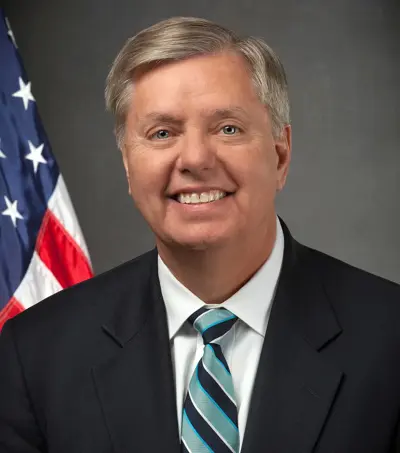
Lindsey Olin Graham is an American lawyer and politician serving as the senior United States senator from South Carolina, a seat he has held since 2003. A member of the Republican Party, Graham served as chair of the Senate Committee on the Judiciary from 2019 to 2021.
