Lindsey Graham Quotes
If we in Congress cannot in time of war regulate the behavior of our troops, then we have no power.
The Attorney General had taken the position that the Congress could not pass laws in time of war that the President was required to follow if in his judgment as Commander in Chief, the war effort and safety of the nation was at stake—that he could instruct the military to ignore laws passed by Congress. The legal theory of the George W. Bush administration was that the President had “inherent powers” under the Constitution and that Congress could not supersede these by legislation.
Lindsey Graham, U. S. Senator (Republican, NC), Senate Judiciary Committee Hearing, February 6, 2006
Sourced by: Eigen's Political and Historical Quotations


President George W. Bush, during the War on Terror, asserted the authority to contravene laws passed by Congress and signed by a previous president. He further, argued that he did not have to inform Congress when he ordered steps that broke the existing laws. His position was based on his claim that there were inherent Presidential powers in wartime granted by the Constitution and the Congress could not override the Constitution.


His main reason for believing this is that all appropriations bills must be initiated by the House of Representatives. Lobbyists therefore often give the House more attention than the Senate.


When the Senate was debating the Gulf of Tonkin Resolution, which would empower the President to take "all necessary measures" to repel any armed attack on U. S. forces, Senator Morse was one of only two Senators opposing the resolution:

Bybee, then and Assistant Attorney General, took the legal position that the President could order the torture of enemy combatants regardless of Congressional laws prohibiting torture. Two years later the memo’s recipient, Alberto Gonzalez, in his confirmation hearings as Attorney General, repudiated the memo, then stating that the President was not above the law and had to obey the laws of Congress that apply to the military.

This quotation was the beginning of a struggle between Congress and the Presidency over war powers. In this case, President Jefferson had sent a squadron of American ships to protect American Shipping from Arab Corsairs who preyed on shipping and captured crews and passengers of all nations to hold for ransom or put into slavery. The American ships, instead of only providing defense, attacked some of the ships of the Bey and freed a captured American frigate and crew. Jefferson acknowledged that the act was a grey area and asked for authority more authority for the Executive Branch to initiate action. The balance of authority for war and/or defense has been struggled over ever since.


President George W. Bush had ordered NSA agents to bug the phones and email of American citizens who might have been talking with an overseas party or e-mailing them out of the country. The administration thought that American citizens might be part of terrorist sleeper cells or unwittingly were aiding terrorists. The law prohibited such activity—where American citizens were involved—without getting a court order. However, the President claimed that he had the inherent power as commander in chief of exempting the court requirement. Others maintained that even the President is not above the law. What was the big puzzle was that there was a secret court Congress had established just for such cases, but the administration instead decided to bypass the court.


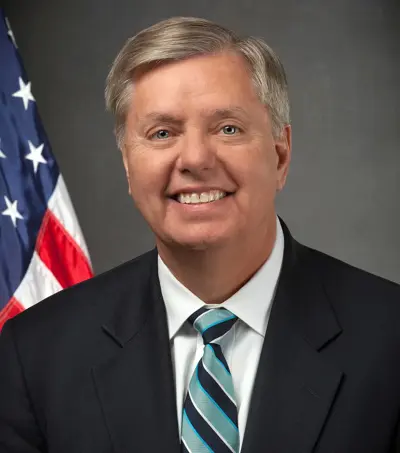
Lindsey Olin Graham is an American lawyer and politician serving as the senior United States senator from South Carolina, a seat he has held since 2003. A member of the Republican Party, Graham served as chair of the Senate Committee on the Judiciary from 2019 to 2021.
