Martin Luther King Jr. Quotes
We are on the threshold of a significant breakthrough, and the greatest weapon is the mass demonstration.
This quotation was documented by an FBI illegal wiretap of King and his associates. The illegal wiretap had been insisted upon by FBI Director J. Edgar Hoover who was a racist and somewhat of a paranoid about communists. However, Attorney General, Robert F. Kennedy personally approved the illegal wiretap.
Martin Luther King Jr., 1929-1968, Clergyman & Civil Rights Leader, Nobel Peace Laureate, Telephone call with his friend and colleague, Stanley Levison, May 1963
Sourced by: Eigen's Political and Historical Quotations

This quotation was documented by an FBI illegal wiretap of King and his associates. The illegal wiretap had been insisted upon by FBI Director J. Edgar Hoover who was a racist and somewhat of a paranoid about communists. However, Attorney General, Robert F. Kennedy personally approved the illegal wiretap.

Lowery was one of the senior Black leaders in the civil rights movement of the late 1950s and early 1960s. In this interview, he was describing the atmosphere in Mobile, Alabama. Clergy of most faiths were active in the Civil Rights Movement in the South with the exception of the Roman Catholic Church which was very institutionally conservative. The Catholic leaders had a problem in that Catholics had been heavily discriminated against in early America and this prejudice was heaviest in the South in the 20th century. They feared that Catholic Activism against the status quo would create more problems for Catholics so they were not very helpful or supportive. This was NOT true for Catholics in general. Many individual Roman Catholics marched in the demonstrations, and some Catholic clergy from outside of the South came to the Southern protests and demonstrations. In the 20th century, the Catholic Church was divided between social activist reformers and in some cases revolutionists and the conservative wing of the Church who had supported the status quo.
His strategy was to fill the jails of Birmingham, and asked the young people to help. The next days saw virtually all the Birmingham high school students our of school and in the streets protesting which was then against the un-Constitutional laws of Birmingham and Alabama. The students were arrested by the droves and the white authorities, believing that they were being firm against “radical lawbreakers”, fell into the trap, and became a travesty to most of the country and the rest of the world and the hundreds of jailed students beaten and assaulted raised the consciousness of whites as well as Blacks.

At the time the Democratic Politicians of the South went to extremes from refusing to register Black voters to countenancing assault, torture and even murder of Blacks who organized voter registration. When the racists switched to the Republican party, is was Republican politicians who tried to make voter registration and voting more difficult for minorities, but the means and degree of these efforts were very mild compared to what is was when Rustin uttered this quotation.

This speech is often referred to as the “Ballot or the Bullet” speech. It was the first time that Malcolm X used the “Ballot or the Bullet”. He was not the first African American to use the “Ballot or the Bullet” phrase. See {624102} for a use over 100 years ago. However, he was really arguing to allow Blacks to vote in the South where it was almost impossible at the time. There was no Voting Rights Act at that time and it was his actions that helped pass one shortly thereafter.


The benefit concert had been organized by a musical group called The People's Artists and it featured baritone Paul Robeson and folk singer Pete Seeger both great musicians with leftist political views. The beneficiary organization was The Civil Rights Congress which was fighting for a stay of execution for six African-American youths sentenced to death in New Jersey. Peekskill, only 25 miles from New York City had 3 major demographic groups: Lower and middle class white workers, middle class blacks who vacationed in the area, and liberal white intellectuals many of whom were Jewish who also vacationed in the area. Robeson had given a speech on Paris a few weeks earlier that was misquoted and the American Legion and others who had been fired up by this editorial and other anti-Communist, anti-Black and anti-Semitic rhetoric. The Concert was attacked by an organized white group who beat ticket holders and staff. The local police did not intervene, and in the aftermath of what had turned into an assault over 700 whites from the Peekskill area applied for membership in the KKK (Klu Klux Klan). See {72167} for Robeson's misquoted statement which was one of the triggers for this assault. The attack galvanized many groups of the area who were not going to let the thugs deny free speech and the following month the concert was performed. The concert itself was free from violence, though marred by the presence of a police helicopter overhead and the flushing out of at least one sniper's nest. An incredible Twenty thousand people showed up. Security, organized by labor unions, was tight with union men standing in a protective circle around the entire concert grounds and sitting with Robeson on the stage. The Musicians performed without incident.

Kennedy was initially very opposed to a civil rights march on Washington and seemed very annoyed to the Blacks in attended. But when faced with the reality of the fact that the March was going to take place and he could not prevent it, he turned around and did everything he could do to protect the marchers and enable the historic event.
The veiled threat of violence and disruption was a tactic that did not work.

This phrase was also to be used over 100 years later by Malcolm X. See {624101} and {38291}.


J. Edgar Hoover, the racist FBI Director, and the Chief of Police of the all white Washington DC Police Force, had made phone calls and sent memos to as many important people they could reach, warning that there was bound to be violence if 100,00 militant Blacks tried to march on Washington. There were twice that number planned for by Bayard Rustin, the man in charge of the March planning, but 250,000 showed up. There were very few incidents and no injuries and deaths as a result of some brilliant planning by Rustin and the cooperation of Attorney General Robert F. Kennedy—the President’s brother—with Rustin. However, the fear spread by Hoover and others caused the major league baseball games to be cancelled, liquor stores to be closed, stores and offices throughout the city were intimidated and closed. But it was one of the best organized and peaceful social/political demonstrations in history.

Earlier, a virtually all white police force in nearby 67% Black Ferguson, had shot an unarmed black young man who was 20 feet away with his hands up, 7 times killing him and then leaving the body uncovered on the street for over 4 hours. Many people of all races began to peacefully demonstrate in Ferguson and were met with military assault weapons pointed at them and military armored vehicles, with the police illegally (as later determined by the courts) were interfering with the right to protest. The demonstrations turned to riots and there was looting and arson of business establishments. The demonstrations started to spread to nearby St. Louis and other cities as the news spread. While the Ferguson officials had behaved so badly and stupidly, the St. Louis mayor exhibited democratic leadership that was an example for others. Slay was then a 4 term mayor, being reelected more than any other mayor in St. Louis history, and was one of the outstanding politicians in America.


He was following the lead of Colin Kaepernick—Quote 643305. Instead of standing and saluting as professional athletes have done for decades before games, Kaepernick had kneeled and refused to stand as a protest about the large number of unarmed Black young men who had been killed by police. . This caused great public criticism but also some initial support. Athletes who did this were potentially risking their multimillion dollar salary as this technically violated their contract to avoid anything embarrassing to the team. He also donated $1 million to programs in the area that were working to enhance Black/white understanding. Even those who disagreed with his choice of protest defended his right to do so, and after the initial furor, public opinion, while not in agreement about his method, tended to support him for having the courage of his convictions and using his celebrity for a worthy cause.


Lev Davidovich Bronstein
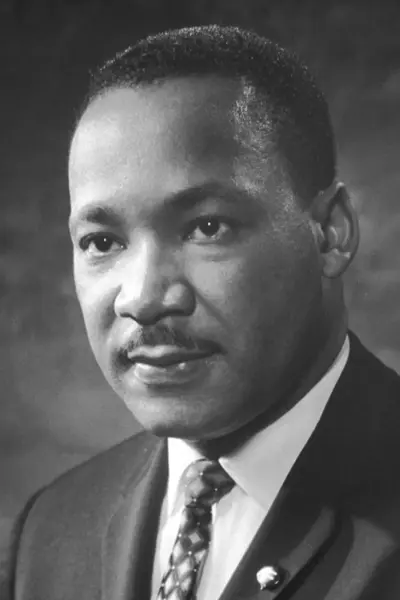
Martin Luther King Jr. was an African American Baptist minister and activist who became the most visible spokesperson and leader in the American civil rights movement from 1955 until his assassination in 1968. King advanced civil rights through nonviolence and civil disobedience, inspired by his Christian beliefs and the nonviolent activism of Mahatma Gandhi. He was the son of early civil rights activist Martin Luther King Sr.
