Nathaniel Philbrick Quotes
Americans have a tendency to exalt the concept of a popular uprising.
Nathaniel Philbrick, Historian & Author, Bunker Hill: A City, A Siege, A Revolution, 2013
Sourced by: Eigen's Political and Historical Quotations

This quotation was documented by an FBI illegal wiretap of King and his associates. The illegal wiretap had been insisted upon by FBI Director J. Edgar Hoover who was a racist and somewhat of a paranoid about communists. However, Attorney General, Robert F. Kennedy personally approved the illegal wiretap.


The veiled threat of violence and disruption was a tactic that did not work.


This was King’s first appearance on the nation’s most prestigious news show.
The first Russian Revolutionary Newspaper for Workers. Volodarsky shot to the top of the early revolutionary leadership. Most of the early Russian leaders were intellectuals and theoreticians. Valodarsky had much organizing experience and could communicate well with workers having been active in the Ladies Garment Workers Union and the American Socialist Party. His practical American approach was just what was needed and he became a key member of the leadership. He was so instrumental in the Bolshevik leadership that he was targeted for assassination along with Lenin and Uritsky. Lenin was only wounded. The others died. Goldstein was only 27 years old. Russia named bridges, schools and warships after him.
Babeuf led a faction of French revolutionists who thought that the revolution had become to hierarchical and had substituted a dictatorship of certain citizens for the dictatorship of the King. He was arrested and executed by the hierarchy he was trying to replace in what has become known as the “conspiracy of the equals.”


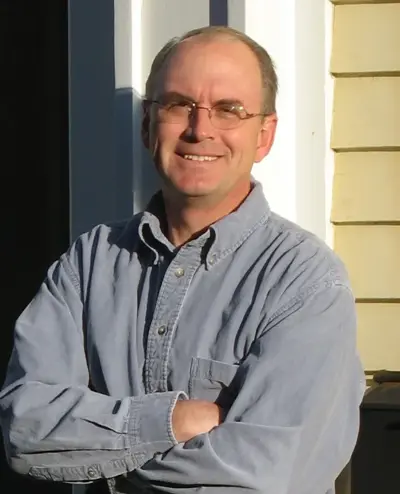
Nathaniel Philbrick is an American author of history, winner of the National Book Award, and finalist for the Pulitzer Prize. His maritime history, In the Heart of the Sea: The Tragedy of the Whaleship Essex, which tells the true story that inspired Melville's Moby-Dick, won the 2000 National Book Award for Nonfiction and was adapted as a film in 2015.
