Mao Zedong Quotes
The revolutionary war is a war of the masses; it can be waged only by mobilizing the masses and relying on them. Revolution is the proper occupation of the masses.
Mao Tse-Tung, 1893-1976, Chairman, Communist Party of China, Be Concerned with the Well-Being of the Masses, Pay Attention to Methods of Work, January 27, 1934
Sourced by: Eigen's Political and Historical Quotations


What is fascinating about his perception of governance is that if this quotation were viewed in isolation, one might conclude that Khamenei was a populist whose political views do not differ much from those of Thomas Jefferson. But then Islam enters the picture. His belief is that the Koran and the word of the Prophet trumps everything else including the people. So he has little trouble passing laws or enacting regulations that are opposed by the vast majority of Iranians. In a Presidential and parliamentary election, the candidates most popular were disqualified by Khamenei on the grounds that they were not sufficiently consonant with his interpretation of Islam. So in reality his personal view of Islam comes first and secondary to that is the will of the people.


The Kuomintang was the anti-Communist political party controlled by Chaing Kai Chek and the major opponent of the Communists. It took more than another decade but Mau and the Communists with the vast support of the majority of the masses, did indeed take over all of China. At the time few thought that they would ever do it.


Germany, after its defeat in WWI was going through massive demonstrations and strikes. The government kept issuing bulletins that “Order Prevails” and the like. Luxemburg’s rhetoric and writing was so damaging to the government that they had her assassinated shortly after this statement.


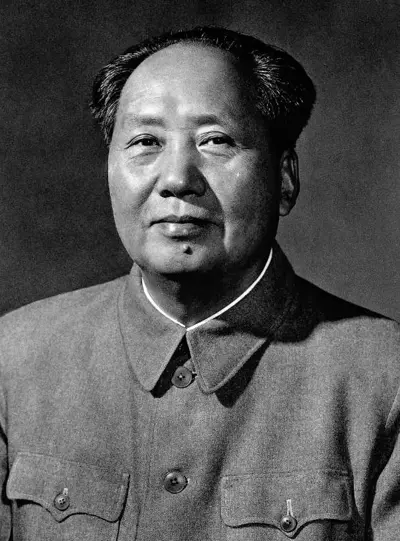
Mao Zedong, also known as Chairman Mao, was a Chinese communist revolutionary who was the founder of the People's Republic of China (PRC), which he ruled as the chairman of the Chinese Communist Party from its establishment in 1949 until his death in 1976. Ideologically a Marxist–Leninist, his theories, military strategies, and political policies are collectively known as Maoism.
