Mao Zedong Quotes
Revolution is not a dinner party, not an essay, nor a painting, nor a piece of embroidery; it cannot be advanced softly, gradually, carefully, considerately, respectfully, politely, plainly and modestly.
Mao Tse-Tung, 1893-1976, Chairman Communist Party of China, Quoted in Time, December 18, 1950
Sourced by: Eigen's Political and Historical Quotations


1st Baron Lytton of Knebworth


Germany, after its defeat in WWI was going through massive demonstrations and strikes. The government kept issuing bulletins that “Order Prevails” and the like. Luxemburg’s rhetoric and writing was so damaging to the government that they had her assassinated shortly after this statement.


Lev Davidovich Bronstein. This is the intellectual origin of the concept of the single party revolutionary state.


The Turkish revolution was by historical standards relatively bloodless as compared especially with other republican revolutions like the United State and France. However, the revolution that brought Ataturk to power was a relatively mild one in terms of the immediate changes that unlike many revolutions which produced instant radical change. In Turkey, the radical change took place in the years after the revolution when Ataturk with hardly any bloodshed produced compulsory public secular education, scientific elevation in society, separation of mosque and state, gender equality including universal voting, change to western dress, elimination of the caliphate, speech and press freedom, and many others including changing the entire language to use the Latin alphabet instead of Arabic. No nation in history has gone thought more social and cultural change and modernized so fast as Turkey after its revolution. The result is the most modern and successful Islamic country in the world.


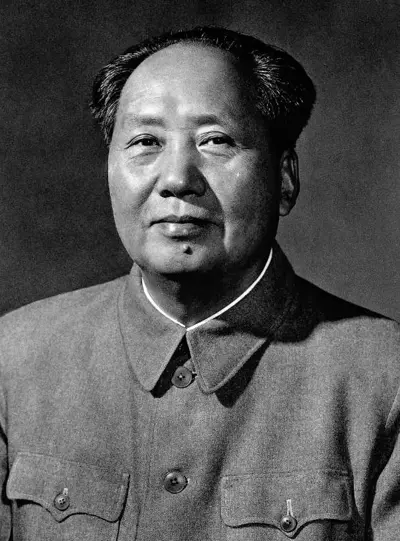
Mao Zedong, also known as Chairman Mao, was a Chinese communist revolutionary who was the founder of the People's Republic of China (PRC), which he ruled as the chairman of the Chinese Communist Party from its establishment in 1949 until his death in 1976. Ideologically a Marxist–Leninist, his theories, military strategies, and political policies are collectively known as Maoism.
