I Ching Quotes
Fire in the lake: The image of revolution.
I Ching: Book of Changes, China, c. 600 B.C.
Sourced by: Eigen's Political and Historical Quotations


Many Southern Rebels saw themselves as patriots and secession as akin to the Boston Tea Party—the start of a revolution.


Harding, not the most historically knowledgeable of American Presidents, had forgotten the revolutionary origin of the United States or its drastically experimental nature. It was the fear of Communism and the Russian Revolution that gave revolution a bad name at the time.

1st Duke of Wellington


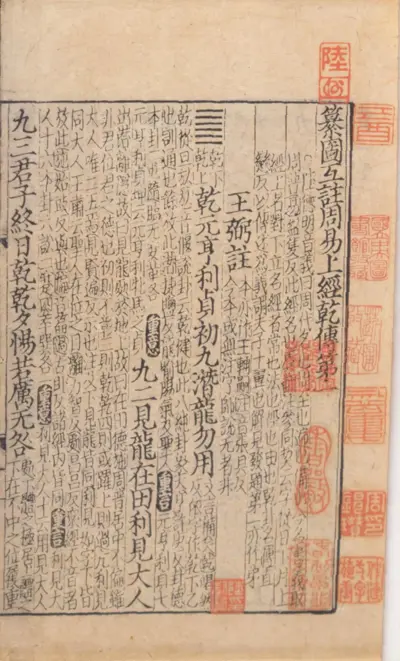
The I Ching or Yi Jing (Chinese: 易經, Mandarin: [î tɕíŋ] (listen)), usually translated as Book of Changes or Classic of Changes, is an ancient Chinese divination text and among the oldest of the Chinese classics. Originally a divination manual in the Western Zhou period (1000–750 BC), over the course of the Warring States period and early imperial period (500–200 BC) it was transformed into a cosmological text with a series of philosophical commentaries known as the "Ten Wings". After becoming part of the Five Classics in the 2nd century BC, the I Ching was the subject of scholarly commentary and the basis for divination practice for centuries across the Far East, and eventually took on an influential role in Western understanding of Eastern thought.
