Yevgenia Chirikova Quotes
I am against revolutions. We have had negative experience with coups and rallies in the past. We remember the shooting at the White House in Moscow The new Russian protest is the most beautiful, most peaceful, most intelligent protest in the world—not a single broken window, not a single burned care or victim.
at the fall of the Soviet Union
Yevgenia Chirikova, Russian Environmentalist and Political Activist, “100 Top Global Thinkers”, Foreign Policy, December 2012
Sourced by: Eigen's Political and Historical Quotations


“Commotions” were riots and protests.

In the history of America

As a result was in 1799 he was indicted, convicted, and fined $480 and sentenced to 18 months in jail. In 1801, newly elected President Thomas Jefferson pardoned Brown along with all violators of the act.


This quotation was documented by an FBI illegal wiretap of King and his associates. The illegal wiretap had been insisted upon by FBI Director J. Edgar Hoover who was a racist and somewhat of a paranoid about communists. However, Attorney General, Robert F. Kennedy personally approved the illegal wiretap.
Louis Napoleon had seized control of France and had very little popular support amongst the aristocracy and middle class. However, the Socialists leading the uprisings frightened them more than Louis Napoleon as the Socialists had the support of the peasants who resented the abuses of the aristocracy and many of the middle class. This was true class warfare and not at all what was possible in the United States when American conservatives would claim “class warfare” when there was a move for more progressive taxation. In Europe, class warfare really meant death and destruction, so for many who knew the history, the claim of “class warfare” was frightening and a large part of the “Red Scare” in the United States.

Helen Suzman, 1917–2009 was a white South African member of Parliament representing Capetown. She came from a Jewish English background and was the leader of the Progressive Party which was the opposition to the Nationalist party that had established the Fascist style Aparteid government where the 10% white population dominated and ruled the 90% black and Asian population. When all the other progressive MPs lost their seats, Suzman was the only member of the South African Parliament who totally opposed the racist apartheid of South Africa. She had little power to change or block Apartheid laws being only a single MP, but her eloquence and vigorous verbal demand for freedom and equality for blacks provided a focal point for foreign boycotts to produce change in South Africa. However, she did not publicly advocate revolution and violence. As a result most of the militant blacks did not value or even follow her activities to end apartheid, and many had no idea who she was. However, Mandela, imprisoned on Robin Island at the time, not only followed her activities, but sent frequent compliments and notes of encouragement to white opponents of the government and apartheid even though many did not support the armed violence that had become necessary to produce change. Mandela knew that there would be core of a white leadership that would favor one-man-one-vote which would make South Africa a black-dominated government when the apartheid Nationalists could be defeated. Mandela was like a great chess player playing a current game but thinking 5 and 6 moves in advance even while in prison. Suzman was one of Mandela’s leading white supporters after the regime change.


He was forgiving them after his troops had killed some protesters the previous “Bloody Sunday” just for protesting their working conditions. See {613674} for how callous he was regarding demonstrators.
King and his associates along with a large number of students were arrested for protesting racial discrimination in Selma. The Chief of police was told that this is just what King wanted. His was a deliberate attempt to get publicity by arresting and prosecuting a group of ministers and school children. So Chief Baker told King that they were not under arrest. So King went outside the jail where many journalists had congregated, hastily called a press conference, and publicly admitted to deliberately drawing attention to the conditions.


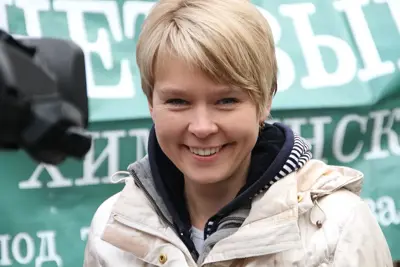
Yevgeniya Chirikova is a Russian environmental activist, primarily known for opposing the building of a motorway through Khimki forest near Moscow. She has also played a prominent role in the 2011–2012 Russian protests following disputed parliamentary elections in Russia. Chirikova has also been credited with "stimulating nationwide interest in political reform". She is currently based in Estonia.
