Gertrude Margaret Lowthian Bell Quotes
Muddle Through! ... so we do–wading through blood and tears that need never have been shed.
Expressing distress that the British were involved in one war after another in the Middle East that she thought never would have occurred if Britain had a foreign policy instead of "Muddling Through". Bell was responsible for setting most of the borders and geographical distributions of peoples in the Middle East, She did the best she could without any strong policy to guide her. A Century later, the Middle Eastern nations were still fighting over those borders, but they remained essentially intact.
Gertrude Margaret Lowthian Bell, 1868–1926, British Oriental Secretary Of the Foreign Office (the only female political officer), Administrator of Arabia, 1916
Sourced by: Eigen's Political and Historical Quotations


Churchill was reported to be so angry and exasperated that his face turned red and he was sputtering. During World War II, Gandhi, Nehru and other Indian Nationalists were leading protests against British control of India. This not only bogged down British soldiers surprising the nationalists rather than fighting in Burma or in other war theaters, but India supplied a huge number of battalions to the British Army the world over and if that manpower dried up, the allied war effort would suffer. The American State Department wanted Churchill to announce that after Japan was defeated, there would be a process toward self-government. This way, they thought, the Indians would redouble their effort to defeat the Japanese and stop the then current protests and strikes. Churchill was strongly opposed to any diminution of the British Empire, but beyond that, he knew India quite well and realized that at any hint of Independence the large Muslim minority in India would insist on autonomy or a partition of the country and use sectarian violence and terror to intimidate the Indian Congress party and the British, but the major victims of the terror—the Hindus and the Sikhs would not remain passive, but would retaliate in kind. President Roosevelt was in the midst of planning the Normandy Landings of the D-Day invasion and did not want to pressure Churchill and the British at this point in time, so the door to independence was not opened during the war and Britain had to deal with the protests throughout. However, when, after the war, the Labor Government, started a process toward Indian independence which resulted in exactly what Churchill predicted. At least 2 million Indians were slaughtered in the internecine terrorist cycles of fear and retaliation motivated terror attacks what were so extensive that the British military could not really control it.


In the midst of the Battle of Sevastopol in the Crimean War, Tolstoy was actually a young lieutenant. At a point in the battle a truce was called between the French and the Russians so that they could each collect their dead and wounded. Then the fighting resumed.


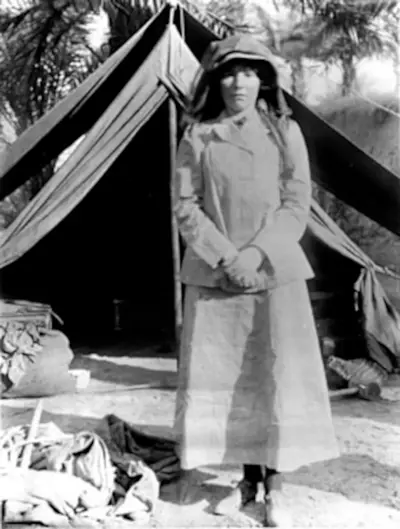
Gertrude Margaret Lowthian Bell, CBE was an English writer, traveller, political officer, administrator, and archaeologist who explored, mapped, and became highly influential to British imperial policy-making due to her knowledge and contacts, built up through extensive travels in Syria-Palestine, Mesopotamia, Asia Minor, and Arabia. Along with T. E. Lawrence, Bell helped support the Hashemite dynasties in what is today Jordan as well as in Iraq.
