Winston Churchill Quotes
Take India if that is what you want! Take it by all means! But I warn you that if I open the door a crack there would be the biggest bloodbath in history.
Churchill was reported to be so angry and exasperated that his face turned red and he was sputtering. During World War II, Gandhi, Nehru and other Indian Nationalists were leading protests against British control of India. This not only bogged down British soldiers surprising the nationalists rather than fighting in Burma or in other war theaters, but India supplied a huge number of battalions to the British Army the world over and if that manpower dried up, the allied war effort would suffer. The American State Department wanted Churchill to announce that after Japan was defeated, there would be a process toward self-government. This way, they thought, the Indians would redouble their effort to defeat the Japanese and stop the then current protests and strikes. Churchill was strongly opposed to any diminution of the British Empire, but beyond that, he knew India quite well and realized that at any hint of Independence the large Muslim minority in India would insist on autonomy or a partition of the country and use sectarian violence and terror to intimidate the Indian Congress party and the British, but the major victims of the terror—the Hindus and the Sikhs would not remain passive, but would retaliate in kind. President Roosevelt was in the midst of planning the Normandy Landings of the D-Day invasion and did not want to pressure Churchill and the British at this point in time, so the door to independence was not opened during the war and Britain had to deal with the protests throughout. However, when, after the war, the Labor Government, started a process toward Indian independence which resulted in exactly what Churchill predicted. At least 2 million Indians were slaughtered in the internecine terrorist cycles of fear and retaliation motivated terror attacks what were so extensive that the British military could not really control it.
Winston Churchill, 1874-1965, British Prime Minister (Conservative), Response to an American diplomatic official who was urging Churchill to open the door to Indian Independence, Washington DC, Quoted in William Phillips, Ventures in Diplomacy, 1952
Sourced by: Eigen's Political and Historical Quotations

A 'kirpan' is a type of knife—a weapon—which all male Sikhs are religiously obligated to have in his possession and on his body at all times. Singh was a Sikh Maharaja (King) of an area that had about an equal number of Muslims and Sikhs. The Sikh's had a long history of living under Muslim domination and wanted no part of any more. Patiala was within the Punjab and Jinnah was insisting that the Punjab should be a Province of the new Pakistan because the Punjab was majority Muslim. However, there were many Sikhs, as well as some Hindus, Buddhists, and Christians and virtually none of these wanted to be a part of Pakistan. Further, a significant portion of the Muslim Punjab population also preferred to join India for many reasons, not the least of which was that they had become used to a democracy where they had complete freedom of religion and civil rights as well, and with the exception of Turkey none of the Muslim countries were democratic. Based on the history, actions, inactions, and statements of the Muslim League which did not democratically elect its leaders, Pakistan would not likely be a democracy that guaranteed civil rights—especially religious rights—to their citizens (and they were right). So the majority of the people of the Punjab were opposed to becoming a part of Pakistan. The Sikhs were passionate opponents of being a part of Pakistan as they knew their Muslim neighbors one of whose major reasons for wanting a Muslim state was that everyone could then be forced to be Muslim or be expelled or ethnically cleansed.

The British wanted to turn over control of India to Nehru's Congress Party and make India independent. However, there had been sectarian rioting and murder between Muslims and all the other religions of India—Hindus, Sikhs, Buddhists, and Christians. Wavell was not confident that Nehru and Congress could control the situation and huge massacres would result. Gandhi, who normally did everything to avoid violence, this time placed Indian independence first and demanded continuation of the complete transition process including the police and military powers. This is one of the very few occasions on which non-violence was not pre-eminent for Gandhi.
The Muslim League was demanding that the Punjab become a part of Pakistan when independence was granted later. However, the Hindus, Sikhs, Buddhists, and Christians were all adamant that they would not live in a Muslim nation which would soon become a de facto theocracy if the British could not control them. The Punjab was divided between India and Pakistan, and hundreds of thousands died in Sikh-Muslim attacks and then Hindu-Muslim conflict in the Punjab.

The throwing of flaming torches to burn out members of the other religion got out of control and the fires spread to the homes of all residents. The fires were so prevalent that the riot was then and has since been referred to as the "Shahalmi Gate Blaze". At the time Jinnah was horrified at the violence, but by the following year he and other Muslim League leaders were aiding and abetting Muslim terrorist attacks to put pressure on the government to create a separate Muslim state upon Indian independence—Pakistan. Most historians agree that the Muslim terrorism in the short run had worked, as it would have been unlikely that India would have been partitioned in the absence of violence. However, it set in motion a cultural pattern of religious hate, bigotry, intolerance, violence and murder which would plague Pakistan thereafter. The politicians throughout the country's history have tried to use the Muslim religious, fundamentalist, extremists for their purposes only to find that the fanatics were out of control and the entire Pakistani population has lived in fear, lest an extremist decide that what they did or say was inimical to Islam and assassinate him or her. They have assassinated even the highest levels of politicians—President, Governors of Provinces, National Legislatures as well as Journalists, writers and academics. But the average Pakistani citizen has always been at risk of brutal murder with hundreds killed every year in an atmosphere of total impunity for the murderers. They have even murdered married women who had been raped on the grounds that they were adulterers and were therefore stoned.


He had little difficulty until he and the British Government announced the plan to grant independence to India. At that point the Muslim League came up with the notion of Partition of India which polarized the Indian politicians mostly along religious lines, and much of India was "up for grabs". No one wanted to concede anything to the other side as this might strengthen the other side's image of its power and just encourage them to go for more. Wavell's job became impossible.


Jinnah and other Muslim leaders had stirred up the Muslims to violence to put pressure on all the parties to accede to Jinnah's Muslim League's demand of an independent Muslim nation—Pakistan. Messervy was very sympathetic to the Muslim leadership as he had been feuding with and frustrated by the predominantly Hindu ruling Congress Party. After partition he accepted the mercenary position of Commander in Chief of the Pakistani Army. Then he was shocked and horrified at the slaughter of the terrorist attacks by the Muslims—about 4,000 Sikh men, women and children had been beaten and cut to death. The Sikhs had been targeted largely because Sikh leaders had recently announced that if there were a Partition, Sikhs would refuse to live in nation under Muslim control.
Singh turned him down. Note that even before Pakistan was a country, Jinnah and other Muslim leaders had hopes of grabbing much of India as the British partitioned it, and have been trying to do so ever since the inception of Pakistan

The British had committed to self-government and independence for India. However, there was great pressure from Muslims for a partition of India to have a separate independent state—Pakistan. The British had to decide whether there should be a separate Muslim state and if so what area should it encompass?" 1st Baron Ismay

Expressing distress that the British were involved in one war after another in the Middle East that she thought never would have occurred if Britain had a foreign policy instead of "Muddling Through". Bell was responsible for setting most of the borders and geographical distributions of peoples in the Middle East, She did the best she could without any strong policy to guide her. A Century later, the Middle Eastern nations were still fighting over those borders, but they remained essentially intact.

A very passionate minority of India’s Muslims demanded a separate Islamic State (what would become Pakistan) but Hindu’s and Muslims were mixed throughout India and many Indians and British were concerned that there would be a bloodbath if the plans for independence went forward. Gandhi desperately tried to avoid violence but thought that independence was so important that the sectarian violence should not be an excuse for continued British rule. Unfortunately, millions of Indians were killed in the riots and ethnic cleansing and revenge that followed independence. Since then there has been much second guessing on how else the situation might have been handled.


Muslim League leaders wanted to stir up India's Muslims in order to prevent Indian Independence from Britain unless India were partitioned and the Muslims could have their own nation. At that point the British and the Congress Party of India—the majority political party were both starting to plan for independence. Most of the Muslim nationalists did not want to have any Muslims living in a Majority Hindu nation. To stop it, they first used fear claiming that when the British left, the Hindus would massacre all the Muslims. They galvanized the Muslims to first attack the Hindus to dissuade then from their attacks which at that point were imaginary except in the conspiracy theory of the Muslim League. The moral logic of this statement was similar, albeit not to the same bloody degree, as the famous quotation of Presidential Candidate Barry Goldwater on extremism." H. S. Suhrawardy

The "trouble" was the terrorist attacks to gain an independent Pakistan that the Punjab Muslims were perpetrating against the Sikhs and the Hindus and the retaliations. At first organized in the cities they had become spontaneous and spread to the countryside. It turned out to be impossible for Governor Jenkins and the limited British troops and police to stop the violence in most places. By the end of the Partition of India hundreds of thousands of Punjabis had been killed.

Two months earlier, Jinnah and the Muslim League had, behind the scenes, orchestrated and abetted vicious, murderous, terrorist attacks on Sikhs by Muslim tribesman brought into the Punjab for the purpose." Master Tara Singh

He was echoing proposals that he made in the Delhi Emergency Committee that had been called to cope with the butchery and murder when the Hindus and Sikhs were trying to leave the areas that were to be part of Pakistan under the Partition and the retaliations against the Delhi Muslims who were trying to flee to the new Pakistan. Unfortunately, the Muslim leadership did not want such a truce as while the land had been partitioned, Indian Money, military equipment, and other resources were yet to be divided and the Muslim leaders who had been so successful playing the violence card to gain and independent Pakistan, did not want to give up that option in the remainder of the division of India. Also, it was not at all clear that the Muslim political leaders could even then control the mobs who they had already whipped up to violence.
The Sultan, led 17 different military expeditions to India to spread the Muslim faith He is one of the few major conquerors of the world who was never defeated in Battle. He conquered the Lahore area and others of India that became Muslim and eventually became Pakistan. He was the first Islamic leader to bear the Title of Sultan demonstrating the separation of the civil power from the Caliph.
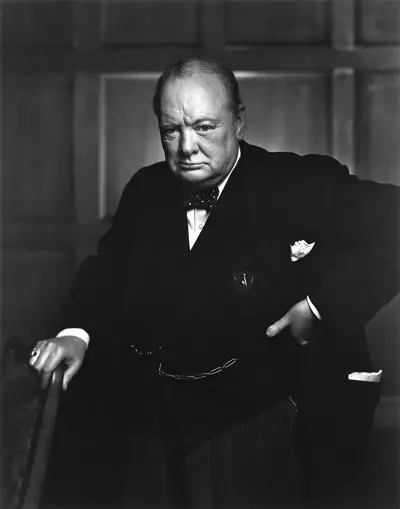
Sir Winston Leonard Spencer Churchill, KG, OM, CH, TD, DL, FRS, RA was the Prime Minister of the United Kingdom from 1940 to 1945, during the Second World War, and again from 1951 to 1955. Apart from two years between 1922 and 1924, Churchill was a Member of Parliament (MP) from 1900 to 1964 and represented a total of five constituencies. Ideologically an economic liberal and imperialist, he was for most of his career a member of the Conservative Party, as leader from 1940 to 1955. He was a member of the Liberal Party from 1904 to 1924. Churchill was also well known for his military career and as a historian, painter and writer, and among his many awards was the Nobel Prize in Literature.
