James Monroe Quotes
The civil war which has so long prevailed between Spain and the Provinces in South America still continues, without any prospect of its speedy termination.
Monroe, James. "Second Annual Message." A Compilation of the Messages and Papers of the Presidents, compiled by James D. Richardson, vol. 2, Bureau of National Literature, 1897, p. 43.


In one of the most unusual revolutions in world history, Brazil became independent from Portugal via a revolution led by the son of the Portuguese King and heir to the throne, Pedro I. The crown prince of Portugal, led Brazil in her breakaway from Portugal and by popular acclaim became Pedro I, Emperor of Brazil. He is probably the only monarch in history who was the heredity monarch of one kingdom and selected by popular acclaim to the throne of another.


Churchill was reported to be so angry and exasperated that his face turned red and he was sputtering. During World War II, Gandhi, Nehru and other Indian Nationalists were leading protests against British control of India. This not only bogged down British soldiers surprising the nationalists rather than fighting in Burma or in other war theaters, but India supplied a huge number of battalions to the British Army the world over and if that manpower dried up, the allied war effort would suffer. The American State Department wanted Churchill to announce that after Japan was defeated, there would be a process toward self-government. This way, they thought, the Indians would redouble their effort to defeat the Japanese and stop the then current protests and strikes. Churchill was strongly opposed to any diminution of the British Empire, but beyond that, he knew India quite well and realized that at any hint of Independence the large Muslim minority in India would insist on autonomy or a partition of the country and use sectarian violence and terror to intimidate the Indian Congress party and the British, but the major victims of the terror—the Hindus and the Sikhs would not remain passive, but would retaliate in kind. President Roosevelt was in the midst of planning the Normandy Landings of the D-Day invasion and did not want to pressure Churchill and the British at this point in time, so the door to independence was not opened during the war and Britain had to deal with the protests throughout. However, when, after the war, the Labor Government, started a process toward Indian independence which resulted in exactly what Churchill predicted. At least 2 million Indians were slaughtered in the internecine terrorist cycles of fear and retaliation motivated terror attacks what were so extensive that the British military could not really control it.

Chile with help from San Martin had ejected the Spanish. O’Higgins, the Chilean leader had joined up with San Martin and served under his command. The sectional rivalry bothered men like Carrera. Instead of seeing all the South Americans fighting the Spanish as allies as O’Higgins did, Carrera and his brothers refused to join a government of unity and they and their troops were just as dictatorial and cruel as the Spanish had been. O’Higgins gave Indians and Blacks equal rights with whites which distressed the aristocratic Carrera’s. Finally the Carrera’s tried to set up their own government, and the new Chilean government disarmed their militia and executed two of the three Carrera brothers who were leading the militia troops who were little more than thieves and brigands.


The commander complained of the brutal behavior of Bolivar and the revolutionaries, but the atrocities committed by the Spanish forces were even worse and both sides fought with techniques that had no civilized restraints.


In one of the most unusual revolutions in world history, Brazil became independent from Portugal via a revolution led by the son of the Portuguese King and heir to the throne, Pedro I. Ironically the King of Portugal, John VI, in this famous quote, encouraged his son to lead the revolution. There were strong separatist sentiment in Brazil and the King thought it would be better to have an independent Brazil lead by a member of his family.
He was a brutal, sadistic war criminal who was assassinated by one of his many enemies in 2000 before he could be brought to trial.

It would be almost 30 years until Jackson would have been proved correct and the Civil War had begun.
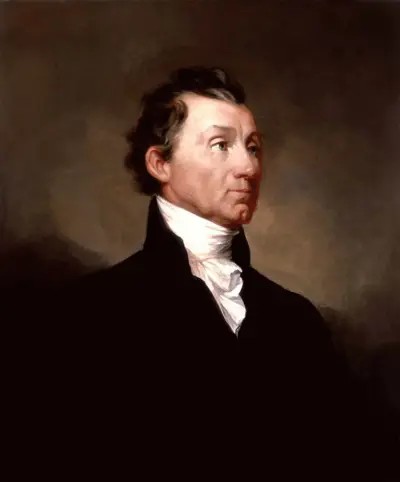
James Monroe was an American statesman, lawyer, diplomat and Founding Father who served as the fifth president of the United States from 1817 to 1825. A member of the Democratic-Republican Party, Monroe was the last president of the Virginia dynasty; his presidency coincided with the Era of Good Feelings. He is perhaps best known for issuing the Monroe Doctrine, a policy of opposing European colonialism in the Americas. He also served as the governor of Virginia, a member of the United States Senate, the U.S. ambassador to France and Britain, the seventh Secretary of State, and the eighth Secretary of War.
