Huseyn Shaheed Suhrawardy Quotes
Bloodshed and disorder are not necessarily evil in themselves, if resorted to in a noble cause.
Muslim League leaders wanted to stir up India's Muslims in order to prevent Indian Independence from Britain unless India were partitioned and the Muslims could have their own nation. At that point the British and the Congress Party of India—the majority political party were both starting to plan for independence. Most of the Muslim nationalists did not want to have any Muslims living in a Majority Hindu nation. To stop it, they first used fear claiming that when the British left, the Hindus would massacre all the Muslims. They galvanized the Muslims to first attack the Hindus to dissuade then from their attacks which at that point were imaginary except in the conspiracy theory of the Muslim League. The moral logic of this statement was similar, albeit not to the same bloody degree, as the famous quotation of Presidential Candidate Barry Goldwater on extremism." H. S. Suhrawardy
Huseyn Shaheed Suhrawardy, 1892—1963, , Indian Chief Minister of Bengal, Prime Minister of Pakistan (Muslim League), One of the leaders of the Indian Muslim League, Article in the Calcutta Statesmen Newspaper
Sourced by: Eigen's Political and Historical Quotations


This quotation is used by the moderate Egyptians and other moderate Arab leaders as well as Israelis and other experts in combating Islamic Fundamentalism to illustrate the thinking process of the Muslim fundamentalist terrorist leader. They are more than willing to sacrifice those they lead (though rarely themselves) if they think that something is to be gained. But if there is nothing to be gained, their “moral” responsibility requires not “wasting” their followers’ lives. Therefore, the way these experts believe they should deal with the radicals is to face them with overwhelming force (a variant of the Powell Doctrine) and never concede anything or let them gain anything from violence. A single concession makes the terrorism, sacrifice and violence worthwhile, but if there is no gain, the leader has wasted the lives of his followers and is less likely to initiate another attack.

Two months earlier, Jinnah and the Muslim League had, behind the scenes, orchestrated and abetted vicious, murderous, terrorist attacks on Sikhs by Muslim tribesman brought into the Punjab for the purpose." Master Tara Singh


He fought in Algeria and other counterinsurgencies and then studied them. He wrote the classic book on counterinsurgency warfare. After all the mistakes the U. S. made after the successful invasion of Iraq, his book and doctrine were very influential in the change in strategy and tactics that turned the Iraq War in our favor.


A very passionate minority of India’s Muslims demanded a separate Islamic State (what would become Pakistan) but Hindu’s and Muslims were mixed throughout India and many Indians and British were concerned that there would be a bloodbath if the plans for independence went forward. Gandhi desperately tried to avoid violence but thought that independence was so important that the sectarian violence should not be an excuse for continued British rule. Unfortunately, millions of Indians were killed in the riots and ethnic cleansing and revenge that followed independence. Since then there has been much second guessing on how else the situation might have been handled.


In 1856 Kansas was at war over slavery. Kansas was to enter the Union with the resident men voting to determine whether it would be a slavery state or a free state. At first pro-slavery forces sent men into Kansas to increase the pre-slavery vote. The abolitionist anti-slavery forces outside of Kansas did the same, and had more money to finance anti-slavery settlers. Soon the pro-slavery forces, realizing that they would be outnumbered turned to violence and began to intimidate abolitionist settlers to return from whence they came. Soon abolitionists were killed and the anti-slavery men retaliated. Soon real war broke out but terrorism was the modality on most attacks as the purpose of the pro-slavery men was to frighten the abolitionists—many of whom were religious pacifists—into leaving the state. Brown and some other abolitionists retaliated with terror of their own, but Brown was rabid. He and his sons, attacked 5 pro-slavery fighters at Pottawatomie Creek, but Brown personally hacked off their limbs with a broadsword and left the bodies to intimidate and terrorize many of the pro slavery people. Brown was such a fanatic that he, in this infamous quote, claimed that his killing and butchery was “justified under the circumstances.” The phrase “Bleeding Kansas” came from the violence and terrorism in this period.


Half a century later some in the Muslim world were justifying terrorism, violence and intimidation on the grounds of desperation of the unique circumstances Islam as in and the attack Islam was under. However, many scholars use this quotation to illustrate that extra legal means and violence has been a Muslim tactic. It actually goes back to the beginning of Islam. It was ironic that Ali Kahn, after supporting extra-legal and violent means of achieving political objectives was himself the victim when he was assassinated in 1951.


Thai society had been polarized and very large peaceful demonstrations (by the Yellow Shirts) were calling for the resignation of the government which although very corrupt and controlled by a single very rich family which had extensive support of the rural and poor (the Red Shirts). This quotation illustrates how a peaceful protest could lead to violence and terrorism. This Red Shirt leader, rather than lose, would lead violence in the streets like the Brown Shirts of the pre WWII Germany. If the violence fails, he was willing to go underground and become a terrorist movement.


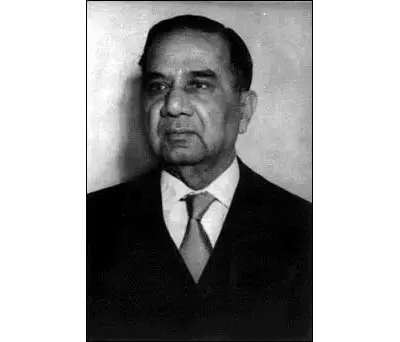
Huseyn Shaheed Suhrawardy was a major statesman in Pakistan (including present-day Bangladesh) during the 20th-century. Born in Bengal to a prominent Sufi family, Suhrawardy was an Oxford-trained lawyer who served as the third and last Prime Minister of Bengal until the Partition of India; and later in the 1950s as the fifth Prime Minister of Pakistan.
