Muhammad Quotes
Fight in Allah’s cause against those who wage war against you, but do not commit aggression, for verily, Allah does not love aggressors.
Muhammad, 571-632, Founder of Islam, Koran
Sourced by: Eigen's Political and Historical Quotations

This is a very important quotation as it shows the logic of many Islamic terrorists. To them Jihad is not terror regardless of what means are used. If the cause is just, like driving unbelievers from what they call Islamic land, then the violence is Jihad and is not only moral but is obligatory for a good Muslim. However if the cause is not moral—like invading someone else’s land, then the same actions are terrorism. The rest of the world defines terrorism by the means of the struggle—not the righteousness of the cause. Suicide Bombing which kills civilians shopping or at a wedding reception is terrorism whether the political or other end is good or bad. At the same time, members of the Muslim brotherhood often when they are speaking to Westerners or the media say that they are opposed to terrorism. The terrorism they are opposed to does not include to them does not include the terrorism of 9-11, the kidnapping and beheading of journalists, or bombing innocent civilians. That is why they can fund and support Hamas—the Palestinian component of the Muslim Brotherhood and still say they oppose terrorism. The occupation is the major offence they must rectify. The reality is that every group of people currently in the Middle East, is descended from peoples who occupied land by conquest and then were conquered by others. In Christ’s time, for example, Jerusalem and the area population was virtually all Jewish but the Romans had conquered and controlled the land. Some of the Jews became Christians, and they both shared the land because Christians then considered themselves to be a sect of Judaism. Then there were many conquests and re-conquests. The city has changed hands by force 44 different times. The Israelis were the last to capture it, The Jewish people were also amongst the earlier conquests, and the Palestinians argue that they inhabited the land even before Islam. Compared to Jerusalem, the problem of who has the right to the old Cherokee land in Georgia today is simple.

Professor Tibi and others have also pointed out that with this definition within Islam, there is no possible justification for a non-Muslim state to war against a Muslim state even of the non-Muslim state was attacked first. However, note that most educated Muslims, like Dr, Tibi, do not hold this preposterous position. It does however illustrate why some Muslims can be outraged when Israel fights back against the thousands of rockets fired from Gaza. To them the 7000 rocket firing was a just war to make Israel a Muslim territory, but no retaliation by non-Muslims can be just.

This sura is interpreted in two ways. For many modern Muslims it means that in discussions and debates on religion with non-Muslims, do not back off, and if you do it is a religious transgression. Defend the faith. For the fundamentalists and extremists, they interpret the same sura in physical warlike terms. So if there is a fight or battle with disbelievers, retreating from the battlefield is not only cowardice and perhaps a crime under military regulations as it is in the West, but it is in Christian terms a mortal sin for which there one will go to hell. So the most religious of Muslims will fight to the death using this sura as their guidance. On the other hand, Muhammad himself as the military and civil leader of Islam made strategic retreats. In the history of almost all warfare between the West and Muslims—especially the Arabs—courage on the battlefield has been lacking and the Israelis, British, French, Americans, and Hindus of India all observe this military weakness and accounting for this is built into their military doctrine.
For many extremists Muslims, this sura calls for the torture or killing of the enemies of Islam. For the more moderate Muslims, the penalty of opposing Islam should be expulsion or banishment. The further modern complication of this sura is the definition of “making war with Allah.” To some extremists, it is writing or publishing anything contrary to their view of Islam; it is occupying any Islamic nation or warring with that nation even though the basis of the war might have nothing to do with religion; it is bringing a Bible into an Islamic nations; it is allowing alcohol to be sold and served; it is opposing their discriminatory customs and laws; it is pressuring them not to stone adulteresses.

Muslim League leaders wanted to stir up India's Muslims in order to prevent Indian Independence from Britain unless India were partitioned and the Muslims could have their own nation. At that point the British and the Congress Party of India—the majority political party were both starting to plan for independence. Most of the Muslim nationalists did not want to have any Muslims living in a Majority Hindu nation. To stop it, they first used fear claiming that when the British left, the Hindus would massacre all the Muslims. They galvanized the Muslims to first attack the Hindus to dissuade then from their attacks which at that point were imaginary except in the conspiracy theory of the Muslim League. The moral logic of this statement was similar, albeit not to the same bloody degree, as the famous quotation of Presidential Candidate Barry Goldwater on extremism." H. S. Suhrawardy


One Islamic belief that has stood since the inception of the religion is that if a true believer who is defending the faith in a jihad is killed, he will immediate be transported to Paradise where he will receive the best of the other world. If a Muslim dies under normal circumstances, he is judged and may or may not attain Paradise depending on his past life. However, if he dies in jihad, all past sins are immediately erased and he is guaranteed Paradise. This quotation is exactly what is told to Muslim fighters and suicide bombers today (see {635766}, {588728} and {590762}) and it is just as effective as ever in persuading men to fight and sacrifice themselves. The Roman Catholic Pope issued a similar edict in the Crusades and fights of both religions were willing and almost anxious to die in battle. In modern times Christian leaders do not make such appeals and if they did, few would believe them.


If some Islamic cleric declares a war or dispute to be an attack on Islam, the penalty is indeed severe for those Muslims who do not join the fight. In some Islamic lands, unbelievers are put to death. Note that the children become the Islamic society’s hostages for the behavior of the father.
Terrorism is not new to Islam. It was proscribed by the Prophet when fighting the “enemies of Allah.” There are those who believe that he was not advocating terrorism as we know that term today. Instead they believe that he meant that they should scare and intimidate the enemies of God, and the sura does not explicitly promote or sanction the murder of innocent civilians. They would interpret this quotation to mean “Attack the military enemies of God so severely that they well fear you and be intimidated.” Others see the quotation as an explicit endorsement of terrorism. What better than beheading or exploding random members of a society that is opposing Islam and Allah in order to “strike terror into the hearts of the enemies of Allah.”

Most modern Islamic clerics were and are shocked at this interpretation of Islam,
“Amir” was the Arabic term for the commanding general or admiral. This is an important quotation as it shows that the ethics of war for the Muslims allowed guerilla warfare and formal pitched battles. Most Christians looked down upon guerilla warfare at the time.
This sura is one of the quotations that causes major anxiety on the part of the Israelis. If the Arabs ever win a major battle and invade Israel, they are instructed to kill the Israelis who in the view of the Arabs “turned them out” of Palestine. Not doing so would produce “tumult and oppression” which, in contrast to most religions, are considered to be worse calamities than slaughter of human beings. A little later in the sura, the Prophet tells the faithful that the infidels need not be killed if they cease to oppose Islam.

See {586041} for a Koranic quotation that urges world domination by Islam. In this quotation, The Prophet was talking to his followers at a time when Islam was not even a dominant religion in Arabia. And war was the way in which tribes, groups, and religions and sects, established themselves and grew. Although there are other Koranic passages which tell the faithful that people can only legitimately come to Islam through individual commitment and willingly, this passage not only seems to contradict that but also reflects a desire to punish and disgrace “non-believing” groups. This vengeance motif is also contradictory to much else of the Koran which generally preaches love, forgiveness, and understanding. However, there are contradictions and intellectual inconsistencies within the Koran just as there are within the Old and New Testaments.

Note that the weak are not to be killed in a jihad UNLESS they “fight with words.” If a woman, child, invalid, older person says something that is interpreted as contrary to Islam, they too shall be killed along with all the males. The overriding principle is that anyone who interferes with the dominance of Islam, is to be killed.


Most sophisticated Muslim theologians would not agree at all with the “permission” he quotes from the Koran. However, there is no hierarchy of belief in Islam and there are tens of thousands of Muslim imams and millions of individual Muslims who believe and teach just what this particular terrorist stated.

Under this interpretation of Islamic law – Sharia – virtually anything regardless of how sinful or immoral under normal circumstances is morally permissible if Islam is being defended from attack. Not all Muslim theologians agree with this principle. See {589498}. There was a similar perversion of theological logic used by Christian Popes during the Crusades.


His views are a mix of modernism and fundamentalism. He favors democracy and elections but also favored the Taliban destroying the great ancient Buddha statues when he was called an idol worshipper for urging the preservation of art.
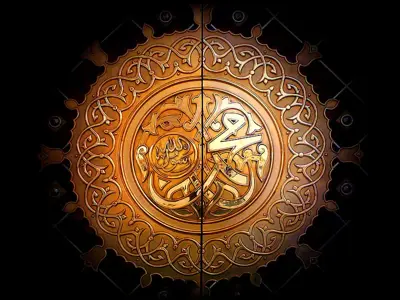
Muhammad was an Arab religious, social, and political leader and the founder of Islam. According to Islamic doctrine, he was a prophet, sent to preach and confirm the monotheistic teachings of Adam, Abraham, Moses, Jesus, and other prophets. He is believed to be the final prophet of God in all the main branches of Islam, though some modern denominations diverge from this belief. Muhammad united Arabia into a single Muslim polity, with the Quran as well as his teachings and practices forming the basis of Islamic religious belief.
