Ayn Rand Quotes
All the reasons which made the initiation of physical force evil, make the retaliatory use of physical force a moral imperative.
Rand, Ayn. The Virtue of Selfishness: A New Concept of Egoism. New American Library, 1964.

Muslim League leaders wanted to stir up India's Muslims in order to prevent Indian Independence from Britain unless India were partitioned and the Muslims could have their own nation. At that point the British and the Congress Party of India—the majority political party were both starting to plan for independence. Most of the Muslim nationalists did not want to have any Muslims living in a Majority Hindu nation. To stop it, they first used fear claiming that when the British left, the Hindus would massacre all the Muslims. They galvanized the Muslims to first attack the Hindus to dissuade then from their attacks which at that point were imaginary except in the conspiracy theory of the Muslim League. The moral logic of this statement was similar, albeit not to the same bloody degree, as the famous quotation of Presidential Candidate Barry Goldwater on extremism." H. S. Suhrawardy


Supreme Court Chief Justice Roger B. Taney, 1777-1864, had written the infamous Dred Scott decision requiring free states to return escaped slaves from the South. This decision widened the gap between North and South and made the Civil War almost inevitable. See {584921}.

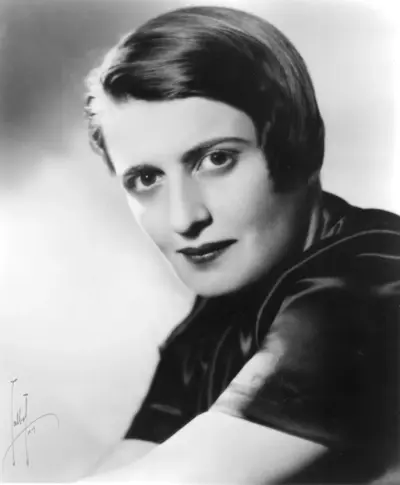
Ayn Rand was a Russian-American writer and philosopher. She is known for her two best-selling novels, The Fountainhead and Atlas Shrugged, and for developing a philosophical system she named Objectivism. Born and educated in Russia, she moved to the United States in 1926. She had a play produced on Broadway in 1935 and 1936. After two early novels that were initially unsuccessful, she achieved fame with her 1943 novel, The Fountainhead. In 1957, Rand published her best-known work, the novel Atlas Shrugged. Afterward, she turned to non-fiction to promote her philosophy, publishing her own periodicals and releasing several collections of essays until her death in 1982.
